

Republic National Distributing Company Bundle

How has Republic National Distributing Company shaped the alcohol distribution landscape?
Republic National Distributing Company (RNDC) is a major player in the beverage industry, but how did it achieve such prominence? RNDC acts as a vital link between suppliers and retailers, facilitating the distribution of wine and spirits across the United States. Its story is one of strategic growth and adaptation within the complex world of alcohol distribution.

The Republic National Distributing Company SWOT Analysis provides an in-depth look at the company's strengths and weaknesses. Understanding the RNDC history is crucial for anyone interested in the beverage industry. This brief overview will explore RNDC's evolution, from its beginnings to its current status as a leading distributor, examining key milestones and its impact on the market.
What is the Republic National Distributing Company Founding Story?
The Republic National Distributing Company (RNDC), a major player in the alcohol distribution sector, has a history rooted in the consolidation of two prominent distributors. The current form of RNDC emerged from the merger of Republic National Distributing Company and National Distributing Company, each with its own distinct origins.
The story of RNDC begins with the individual histories of its founding companies. National Distributing Company was established in 1935 by the Haas family in Atlanta, Georgia, marking its entry into the beverage alcohol industry shortly after the repeal of Prohibition. This era necessitated the development of new distribution networks.
Simultaneously, Republic National Distributing Company, also played a crucial role in the formation of the modern RNDC. Both companies initially acted as intermediaries, purchasing alcoholic beverages from suppliers and distributing them to licensed retailers, including bars, restaurants, and liquor stores. Their business models encompassed product movement, sales, marketing, and adherence to state-specific regulations. The initial funding for these ventures likely came from a combination of entrepreneurial capital and early business loans, as the industry was re-establishing itself.

Early Days of RNDC
RNDC's evolution reflects the changing landscape of the alcohol distribution industry. The company's structure and operations were significantly shaped by the post-Prohibition environment.
- National Distributing Company was founded in 1935 by the Haas family in Atlanta, Georgia.
- The early business model involved purchasing from suppliers and distributing to retailers.
- The company navigated the complexities of state-specific regulations.
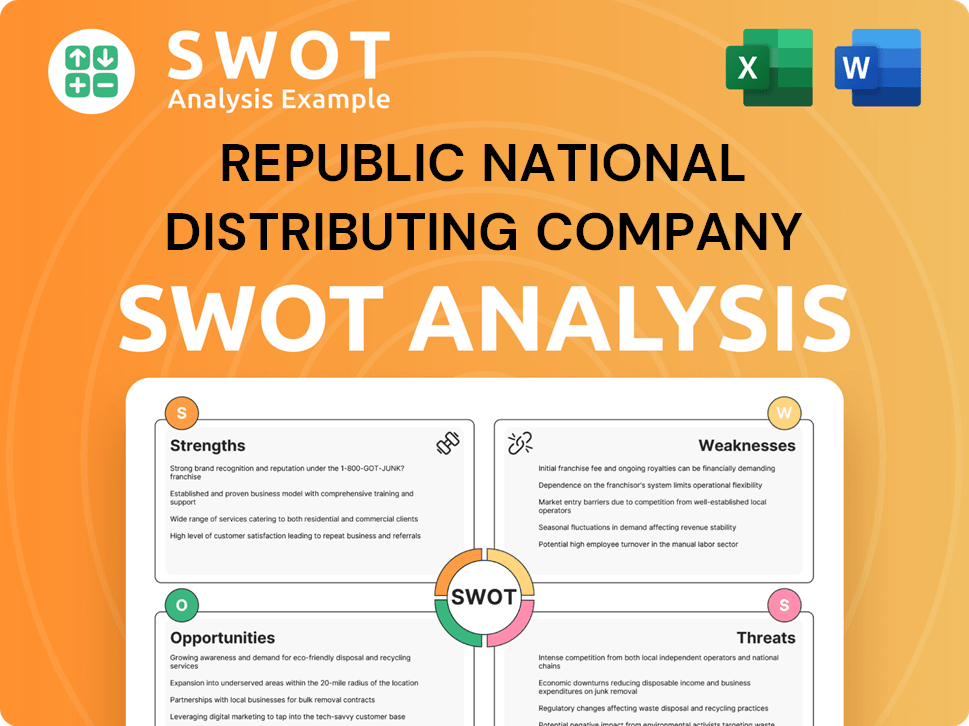
Republic National Distributing Company SWOT Analysis
- Complete SWOT Breakdown
- Fully Customizable
- Editable in Excel & Word
- Professional Formatting
- Investor-Ready Format
What Drove the Early Growth of Republic National Distributing Company?
The early growth and expansion of the company, now known as Republic National Distributing Company (RNDC), were marked by strategic acquisitions and market penetration, a common trend in the wholesale alcohol distribution sector. Following initial mergers, RNDC focused on geographical expansion, entering new states and fortifying its presence in existing markets. This involved establishing new distribution centers and sales teams, as well as integrating acquired businesses, which brought established supplier relationships and customer bases. This period was crucial in shaping the company's trajectory within the competitive beverage industry.
 Geographical Expansion
RNDC's expansion involved entering new states and increasing its footprint in existing ones. This included setting up new distribution centers and sales teams. The company also integrated acquired businesses, leveraging their existing networks to accelerate growth. This strategic approach allowed RNDC to quickly establish a significant presence across various markets, solidifying its position as a leading distributor.
Portfolio and Market Share Growth
A key aspect of RNDC's growth was expanding its portfolio to include a wider array of wine and spirits brands. Securing distribution rights for prominent national and international brands significantly increased its market share. This diversification helped RNDC cater to evolving consumer preferences and maintain a competitive edge in the alcohol distribution market.
Team and Operational Development
Team expansion occurred in tandem with geographical growth, with an emphasis on building robust sales, marketing, and logistics teams to support the growing operations. RNDC focused on efficient operations and strong relationships with suppliers and retailers. In 2024, the company employed over 10,000 people across its operations, showcasing its significant workforce dedicated to distribution and sales.
Strategic Partnerships and Regulatory Compliance
RNDC's entry into new markets was often facilitated by strategic partnerships and a deep understanding of the regulatory nuances of each state. This was critical in the highly regulated beverage alcohol industry. The company's ability to navigate these complexities allowed for smoother expansion and compliance, which is essential for sustained growth and market access.
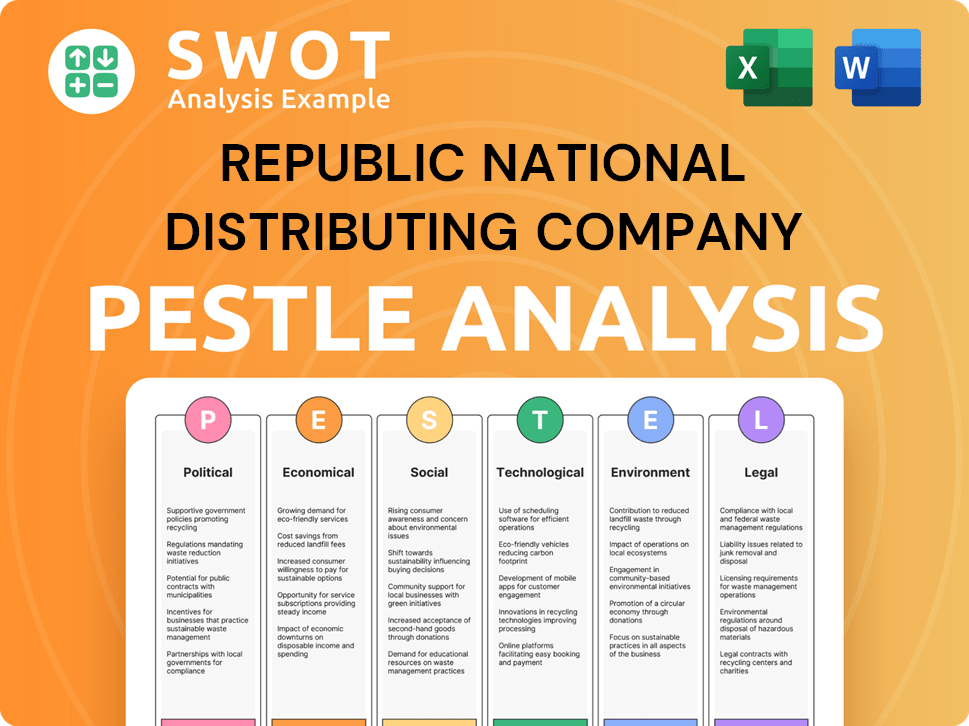
Republic National Distributing Company PESTLE Analysis
- Covers All 6 PESTLE Categories
- No Research Needed – Save Hours of Work
- Built by Experts, Trusted by Consultants
- Instant Download, Ready to Use
- 100% Editable, Fully Customizable
What are the key Milestones in Republic National Distributing Company history?
The RNDC history is marked by significant growth and strategic moves within the alcohol distribution sector. A key aspect of its journey has been its consistent expansion across numerous states, solidifying its position as a leading beverage alcohol distributor in the United States. This growth has been supported by strategic acquisitions and partnerships, enhancing its market presence and product offerings.
| Year | Milestone |
|---|---|
| 1998 | Republic Beverage Company and National Distributing Company merged to form Republic National Distributing Company (RNDC). |
| 2000s | RNDC expanded its operations through strategic acquisitions and partnerships, increasing its footprint across the United States. |
| 2010s | The company continued to grow, focusing on enhancing its distribution network and expanding its portfolio of brands. |
| 2020 | RNDC announced a partnership with Breakthru Beverage Group to form a national alignment, significantly expanding its reach. |
| 2024 | RNDC continues to be one of the largest alcohol distributors in the U.S., with a significant presence in multiple states, and a focus on technological advancements and supply chain optimization. |
RNDC has consistently implemented innovations in logistics and supply chain management to optimize its distribution network. The company has also invested in data analytics to enhance sales strategies and brand building for its suppliers, providing insights into market trends and consumer behavior.

Supply Chain Optimization
RNDC has invested in advanced logistics and warehouse management systems to improve efficiency. This includes real-time tracking, inventory management, and route optimization to ensure timely delivery.
Data Analytics
RNDC utilizes data analytics to provide suppliers with insights into market trends and consumer preferences. This allows for more targeted marketing efforts and better inventory management.
Technology Integration
The company has integrated advanced technology solutions, including mobile applications for sales representatives and digital platforms for order management. This improves communication and streamlines operations.
E-commerce Solutions
RNDC has developed e-commerce platforms and digital tools to support its suppliers and retailers. These tools facilitate online ordering, inventory management, and sales tracking.
Sustainability Initiatives
RNDC has implemented sustainable practices in its operations, including reducing carbon emissions and optimizing its distribution routes. This supports environmental responsibility.
Supplier Collaboration
RNDC has improved collaboration with suppliers through integrated digital platforms. This allows for better communication, improved forecasting, and streamlined supply chain processes.
RNDC faces challenges inherent in the highly regulated and competitive beverage alcohol industry. These challenges include adapting to evolving state-specific regulations and managing complex logistics for diverse product portfolios.
Regulatory Compliance
Adapting to changing state and federal regulations in the alcohol industry is a constant challenge. Compliance requires significant resources and expertise to navigate complex legal requirements.
Competition
The beverage industry is highly competitive, with numerous distributors vying for market share. This requires continuous innovation and strategic partnerships to maintain a competitive edge.
Supply Chain Complexity
Managing a diverse product portfolio and ensuring efficient distribution across various states presents logistical challenges. This includes managing inventory, transportation, and storage.
Economic Fluctuations
Economic downturns and changes in consumer spending can impact the demand for alcoholic beverages. Distributors must adapt to changing market conditions and consumer preferences.
Direct-to-Consumer Models
The rise of direct-to-consumer sales models poses a challenge to traditional distribution networks. Distributors must find ways to compete with or integrate these new channels.
Consumer Preferences
Changing consumer tastes and preferences, such as the growing popularity of craft beverages, require distributors to adapt their product offerings and marketing strategies. This includes the need to quickly identify and distribute new products.
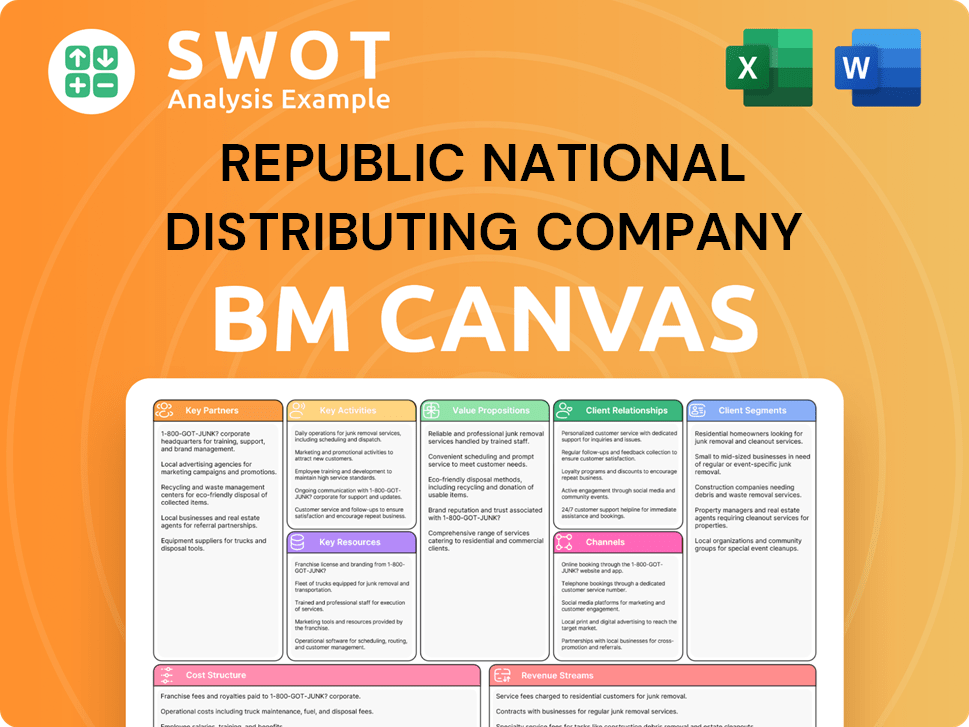
Republic National Distributing Company Business Model Canvas
- Complete 9-Block Business Model Canvas
- Effortlessly Communicate Your Business Strategy
- Investor-Ready BMC Format
- 100% Editable and Customizable
- Clear and Structured Layout
What is the Timeline of Key Events for Republic National Distributing Company?
The RNDC history is marked by strategic mergers and expansions. The company's evolution reflects the dynamic shifts within the alcohol distribution sector. Key milestones include the formation of National Distributing Company in 1935, followed by significant growth through acquisitions and mergers, culminating in the 2007 merger that created the modern Republic National Distributing Company. Further expansion and adaptation to market changes, including the impact of the COVID-19 pandemic and a focus on digital capabilities, have shaped its trajectory. RNDC continues to adapt and innovate in the competitive beverage industry.
| Year | Key Event |
|---|---|
| 1935 | National Distributing Company (NDC) founded by the Haas family in Atlanta, Georgia. |
| 1970s-1990s | Period of regional expansion for both NDC and RNDC predecessors through acquisitions. |
| 2007 | The merger of Republic National Distributing Company and National Distributing Company forms RNDC. |
| 2019 | RNDC and Breakthru Beverage Group announce the formation of Bacchus for joint ventures. |
| 2020-2023 | Adaptation to market shifts influenced by the COVID-19 pandemic, including increased off-premise sales and e-commerce growth. |
| 2024-2025 | Focus on leveraging technology for supply chain optimization and enhancing digital platforms. |
Technological Advancement
RNDC is expected to increase its investment in technology. This includes supply chain optimization and data analytics. These advancements are designed to improve efficiency and provide better insights to partners. The company aims to streamline operations and enhance decision-making through these technological integrations.
Market Expansion
Strategic initiatives will likely include continued market expansion. This could involve further acquisitions or joint ventures. The company is poised to strengthen its presence in existing markets. RNDC aims to capture new opportunities and increase its market share within the alcohol distribution sector.
Digital Integration
A deeper integration of digital solutions into sales and marketing efforts is anticipated. This includes enhancing e-commerce platforms. RNDC is focused on adapting to evolving consumer preferences and industry trends. The goal is to provide a seamless experience for both suppliers and retailers.
Industry Trends and Leadership
The company is expected to focus on premiumization and e-commerce. Leadership emphasizes operational excellence and strong relationships. Adapting to consumer trends will be key for RNDC's future. These strategies will ensure RNDC remains central in the beverage alcohol industry.
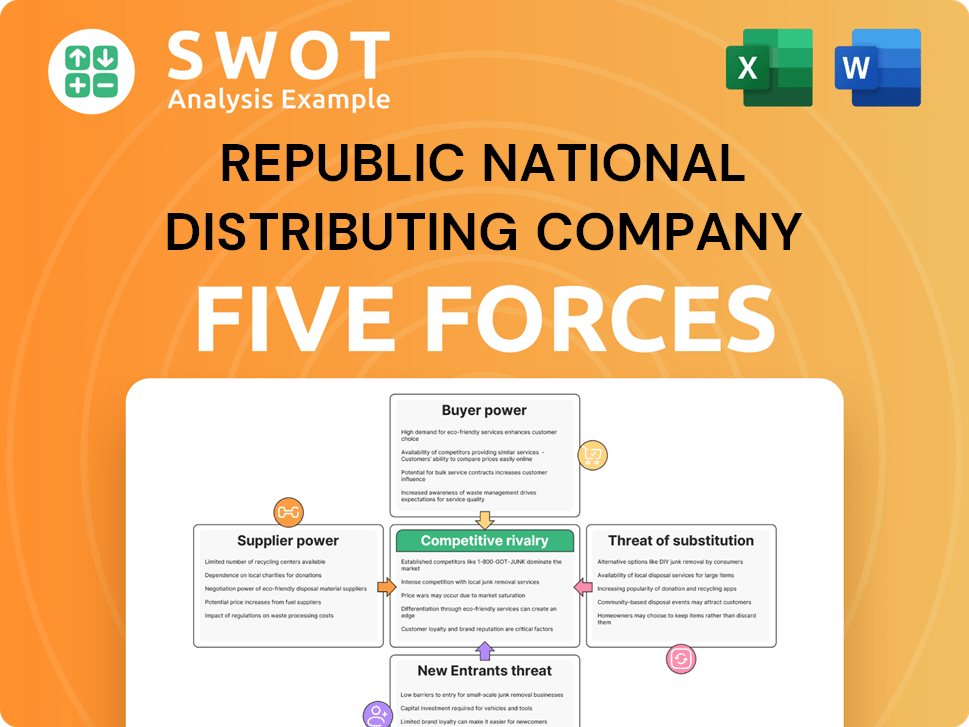
Republic National Distributing Company Porter's Five Forces Analysis
- Covers All 5 Competitive Forces in Detail
- Structured for Consultants, Students, and Founders
- 100% Editable in Microsoft Word & Excel
- Instant Digital Download – Use Immediately
- Compatible with Mac & PC – Fully Unlocked
Related Blogs

- What is Competitive Landscape of Republic National Distributing Company Company?
- What is Growth Strategy and Future Prospects of Republic National Distributing Company Company?
- How Does Republic National Distributing Company Company Work?
- What is Sales and Marketing Strategy of Republic National Distributing Company Company?
- What is Brief History of Republic National Distributing Company Company?
- Who Owns Republic National Distributing Company Company?
- What is Customer Demographics and Target Market of Republic National Distributing Company Company?
Disclaimer
All information, articles, and product details provided on this website are for general informational and educational purposes only. We do not claim any ownership over, nor do we intend to infringe upon, any trademarks, copyrights, logos, brand names, or other intellectual property mentioned or depicted on this site. Such intellectual property remains the property of its respective owners, and any references here are made solely for identification or informational purposes, without implying any affiliation, endorsement, or partnership.
We make no representations or warranties, express or implied, regarding the accuracy, completeness, or suitability of any content or products presented. Nothing on this website should be construed as legal, tax, investment, financial, medical, or other professional advice. In addition, no part of this site—including articles or product references—constitutes a solicitation, recommendation, endorsement, advertisement, or offer to buy or sell any securities, franchises, or other financial instruments, particularly in jurisdictions where such activity would be unlawful.
All content is of a general nature and may not address the specific circumstances of any individual or entity. It is not a substitute for professional advice or services. Any actions you take based on the information provided here are strictly at your own risk. You accept full responsibility for any decisions or outcomes arising from your use of this website and agree to release us from any liability in connection with your use of, or reliance upon, the content or products found herein.