

Portillo’s Bundle

How Did a Hot Dog Stand Become a Fast-Casual Empire?
Journey back to 1963, when a simple hot dog stand in Villa Park, Illinois, sparked a culinary revolution. This is the Portillo’s SWOT Analysis, a story of humble beginnings and ambitious dreams. From its inception as 'The Dog House' to its current status as a beloved restaurant chain, Portillo's history is a testament to the power of quality and customer experience.

Discover the fascinating Portillo’s SWOT Analysis, from its origin to the present day. Learn about Portillo's founder and the early days of Portillo's restaurants, exploring the key milestones that shaped its unique identity. Uncover the secrets behind Portillo's expansion over the years and the enduring appeal of its classic menu items, including the iconic Chicago-style hot dogs and Italian beef sandwiches.
What is the Portillo’s Founding Story?
The story of Portillo's begins on April 9, 1963. This marked the inception of what would become a beloved restaurant chain. The company's origin is rooted in a simple vision.
Dick Portillo, the founder, started with a humble investment. His initial venture, 'The Dog House,' was a small trailer. This marked the beginning of a journey that would transform the fast-food landscape.
Dick Portillo's journey illustrates how a straightforward idea, executed well, can flourish. His focus on quality and service set the stage for the brand's future success. This is a key aspect of the Competitors Landscape of Portillo’s.

Founding Story
Dick Portillo founded the company on April 9, 1963, with an investment of $1,100. The first location was 'The Dog House' in Villa Park, Illinois.
- Dick Portillo's initial focus was on serving quality hot dogs and other fast-food items.
- The original menu featured classic Chicago-style hot dogs.
- The company name transitioned from 'The Dog House' to 'Portillo's' as the menu expanded.
- Dick Portillo used his personal savings to fund the initial venture.
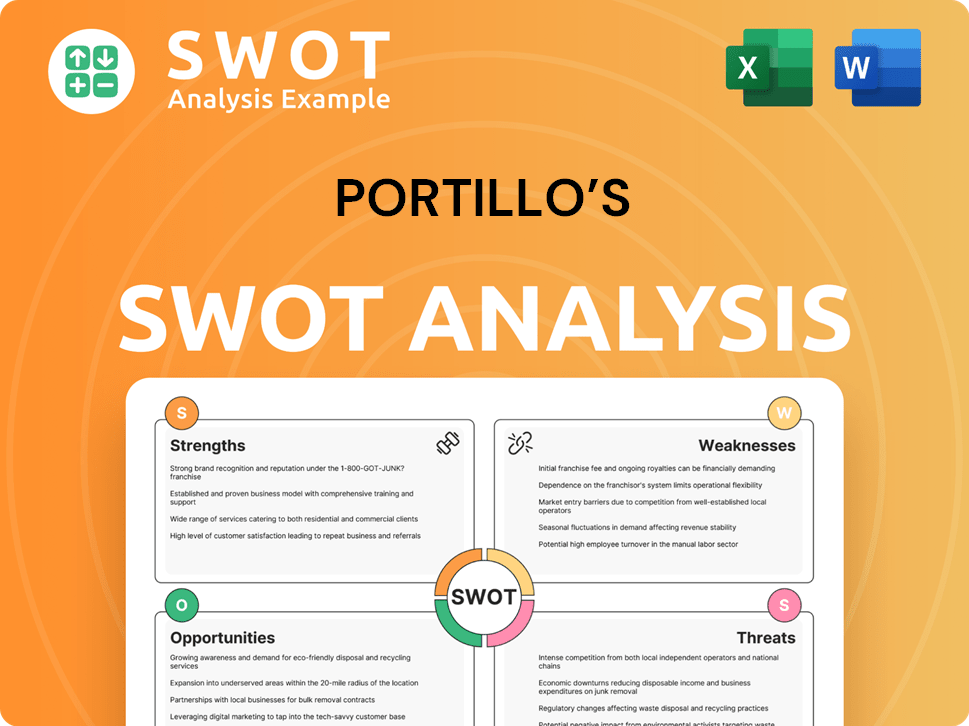
Portillo’s SWOT Analysis
- Complete SWOT Breakdown
- Fully Customizable
- Editable in Excel & Word
- Professional Formatting
- Investor-Ready Format
What Drove the Early Growth of Portillo’s?
The early years of the company, following its founding, saw consistent growth and expansion. After the initial success of 'The Dog House,' the menu expanded to include Italian beef sandwiches, which quickly became a signature item. These early product launches were well-received, leading to increased sales. The first significant expansion beyond the original trailer was the opening of a larger restaurant in Villa Park.
 Early Growth Strategy
The company's early growth was primarily organic, driven by word-of-mouth and a reputation for consistent quality. As demand grew, more staff were hired to manage the increasing customer volume. The strategy focused on opening new locations within the Chicago metropolitan area, carefully selecting sites with high visibility and accessibility.
Leadership and Financials
Leadership remained consistent with Dick Portillo at the helm, guiding the company's strategic direction. While specific dates for early major capital raises are not widely publicized, the company's growth was fueled by reinvesting profits back into the business. The market reception was overwhelmingly positive, with the company establishing itself as a beloved local institution.
Market Reception and Impact
Despite a competitive landscape of regional fast-food chains, the company thrived, solidifying its brand identity and operational model before broader geographic expansion. These early growth efforts shaped the trajectory of the company. The company's commitment to quality and customer satisfaction, as highlighted in Mission, Vision & Core Values of Portillo’s, played a key role in its success.
Recent Financial Data
By 2024, the company reported total revenues of $673.8 million, a 15.3% increase year-over-year. The company also saw a 6.2% increase in average unit volumes for its restaurants in 2024, reaching $3.8 million.
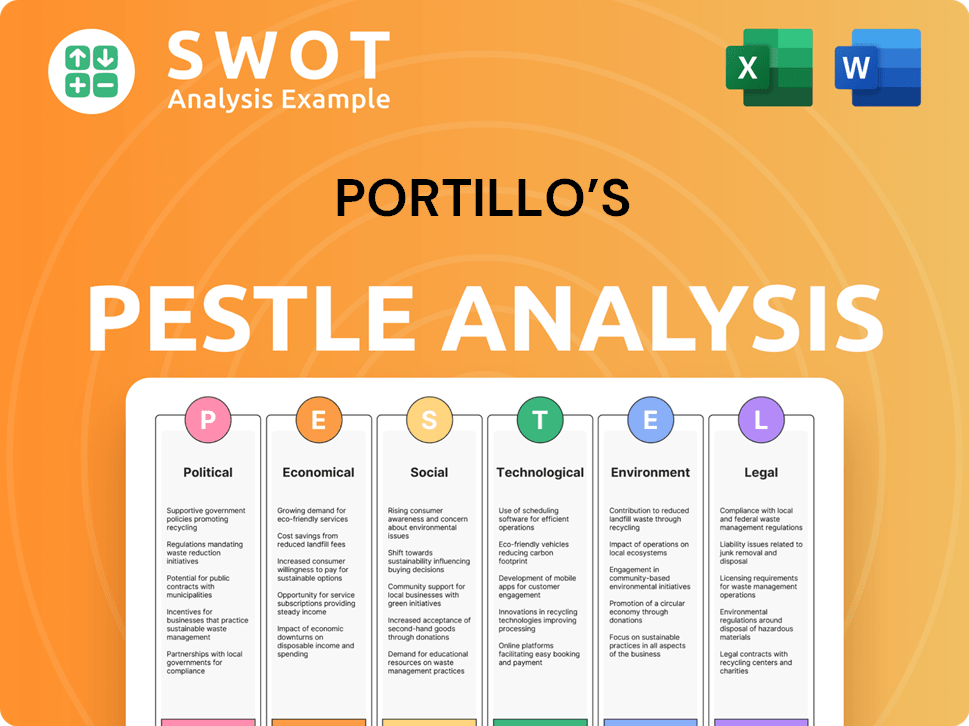
Portillo’s PESTLE Analysis
- Covers All 6 PESTLE Categories
- No Research Needed – Save Hours of Work
- Built by Experts, Trusted by Consultants
- Instant Download, Ready to Use
- 100% Editable, Fully Customizable
What are the key Milestones in Portillo’s history?
The Portillo's company has achieved several milestones since its inception, expanding from a single hot dog stand to a well-known restaurant chain. The journey of the Portillo's restaurant chain has been marked by strategic decisions and a focus on customer satisfaction, contributing to its enduring popularity and growth.
| Year | Milestone |
|---|---|
| 1963 | Dick Portillo opens the first hot dog stand, originally named "Dick's Hot Dogs," in Villa Park, Illinois. |
| 1967 | The business is renamed "Portillo's Hot Dogs" and begins to expand its menu and offerings. |
| 1983 | Portillo's opens its first location with a drive-thru, recognizing the growing demand for convenience. |
| 1995 | The company starts expanding outside of Illinois, opening locations in other states. |
| 2014 | The company is acquired by Berkshire Partners. |
| 2021 | Portillo's goes public, listing on the NASDAQ under the ticker symbol PTLO. |
| 2024 | Portillo's opened 12 new restaurants, increasing its restaurant footprint. |
Innovations have been central to the success of the Portillo's company, including the early adoption of drive-thru service, which enhanced customer convenience. Additionally, the company developed a highly efficient kitchen operation, ensuring quick service without compromising food quality, a significant achievement in the fast-casual industry.

Drive-Thru Service
Portillo's was an early adopter of drive-thru service, recognizing the growing consumer demand for convenience and speed. This innovation significantly improved customer experience and operational efficiency.
Efficient Kitchen Operations
The company implemented highly efficient kitchen operations, enabling quick service without sacrificing food quality. This operational excellence is a key factor in maintaining customer satisfaction and managing high volumes.
Digital Ordering and Delivery
Portillo's accelerated its investment in technology, including online ordering platforms and a loyalty program, to enhance the customer experience and streamline operations. Digital orders accounted for approximately 42% of total orders in 2024.
Menu Innovation
While maintaining its core menu, Portillo's has introduced new menu items and variations to cater to evolving customer preferences. This includes limited-time offers and seasonal specials to keep the menu fresh and appealing.
Partnerships for Delivery
Portillo's has formed partnerships with various delivery services to expand its reach and offer convenience to customers who prefer dining at home. These partnerships have increased accessibility and sales.
Loyalty Program
The company has developed a loyalty program to reward frequent customers and gather valuable data on customer preferences. This data helps in tailoring marketing efforts and improving customer engagement.
Despite its successes, the Portillo's company has faced challenges, including economic downturns and intense competition from both national chains and local eateries. Maintaining consistent quality and service across a growing number of locations has also been an ongoing operational challenge.
Economic Downturns
Economic downturns can impact consumer spending, affecting restaurant sales and profitability. Portillo's must adapt its strategies to maintain customer loyalty and manage costs during these periods.
Competitive Pressure
The restaurant industry is highly competitive, with both national chains and local eateries vying for market share. Portillo's must continually innovate and differentiate itself to stay ahead.
Maintaining Quality and Service
Ensuring consistent food quality and service across all locations is a significant operational challenge as the company expands. This requires rigorous training, quality control, and supply chain management.
COVID-19 Pandemic
The COVID-19 pandemic presented significant hurdles, requiring adaptations in service models and increased focus on digital ordering and delivery. The company accelerated its investment in technology.
Supply Chain Disruptions
Disruptions in the supply chain can affect the availability of ingredients and increase costs. Portillo's must manage its supply chain effectively to mitigate these risks.
Labor Shortages
Labor shortages can impact staffing levels and operational efficiency. Portillo's must develop strategies to attract and retain employees, such as competitive wages and benefits.
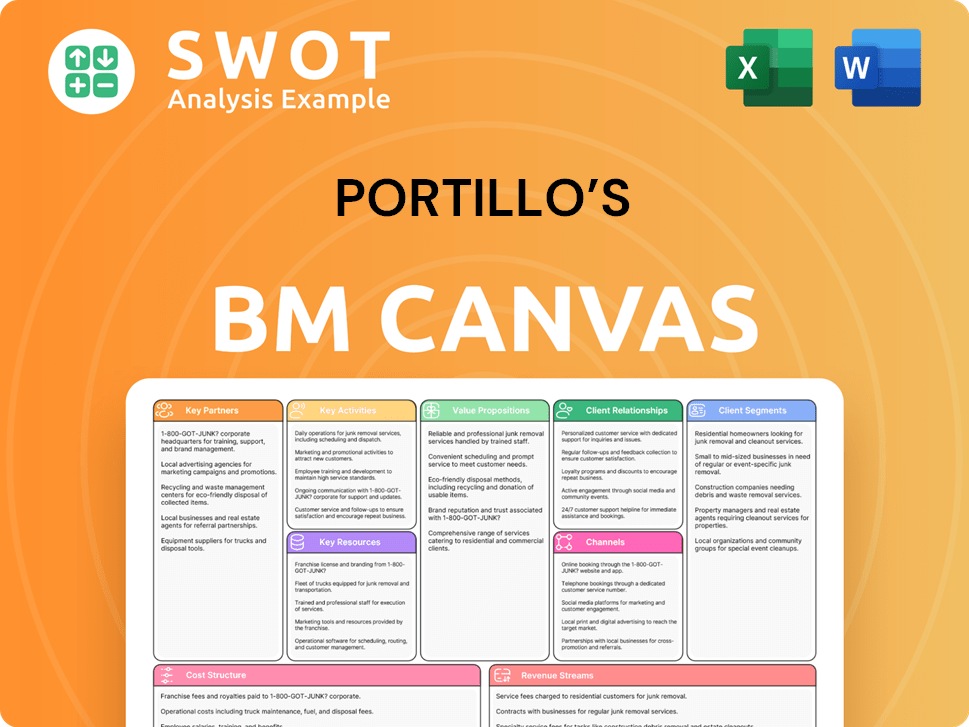
Portillo’s Business Model Canvas
- Complete 9-Block Business Model Canvas
- Effortlessly Communicate Your Business Strategy
- Investor-Ready BMC Format
- 100% Editable and Customizable
- Clear and Structured Layout
What is the Timeline of Key Events for Portillo’s?
The Marketing Strategy of Portillo’s has a rich history, rooted in its humble beginnings and marked by significant milestones that have shaped it into the beloved restaurant chain it is today. Understanding the Portillo's history and Portillo's company evolution provides valuable insights into its enduring appeal and future prospects.
| Year | Key Event |
|---|---|
| 1963 | Dick Portillo opens the first Portillo's restaurants as a small hot dog stand called "Dick's Hot Dogs" in Villa Park, Illinois. |
| 1967 | The hot dog stand is renamed "Portillo's" and expands its menu and offerings. |
| 1983 | Portillo's opens its first restaurant with a drive-through, enhancing convenience for customers. |
| 1994 | The company begins its expansion outside of Illinois, opening locations in neighboring states. |
| 2005 | Portillo's introduces its catering services, further diversifying its revenue streams. |
| 2014 | The company is acquired by Berkshire Partners, a private equity firm, to fuel further growth. |
| 2021 | Portillo's goes public, trading on the Nasdaq under the ticker symbol PTLO. |
| 2023 | The company reports revenues of approximately $698.8 million, demonstrating continued growth and resilience. |
Expansion and Growth
Portillo's continues to expand its footprint, with new locations planned across the United States. The company's growth strategy focuses on both organic expansion and strategic acquisitions. In 2024, the company aims to open several new restaurants, building on its existing base of over 80 locations.
Menu Innovation
While staying true to its classic menu, Portillo's is also exploring new menu items and limited-time offers. The company is committed to maintaining its high standards for food quality and customer service. Menu innovation is a key part of attracting new customers and keeping existing ones engaged.
Digital Initiatives
Portillo's is investing in its digital presence, including online ordering, mobile apps, and loyalty programs. These initiatives aim to enhance the customer experience and streamline operations. The company is also using data analytics to understand customer preferences and tailor its offerings accordingly.
Market Trends and Challenges
The restaurant industry faces challenges such as rising food costs, labor shortages, and changing consumer preferences. Portillo's is adapting by optimizing its supply chain, investing in employee training, and focusing on value. The company is well-positioned to navigate these challenges due to its strong brand recognition and loyal customer base. The company is actively monitoring consumer trends to stay relevant.
Portillo’s Porter's Five Forces Analysis
- Covers All 5 Competitive Forces in Detail
- Structured for Consultants, Students, and Founders
- 100% Editable in Microsoft Word & Excel
- Instant Digital Download – Use Immediately
- Compatible with Mac & PC – Fully Unlocked

Related Blogs

- What is Competitive Landscape of Portillo’s Company?
- What is Growth Strategy and Future Prospects of Portillo’s Company?
- How Does Portillo’s Company Work?
- What is Sales and Marketing Strategy of Portillo’s Company?
- What is Brief History of Portillo’s Company?
- Who Owns Portillo’s Company?
- What is Customer Demographics and Target Market of Portillo’s Company?
Disclaimer
All information, articles, and product details provided on this website are for general informational and educational purposes only. We do not claim any ownership over, nor do we intend to infringe upon, any trademarks, copyrights, logos, brand names, or other intellectual property mentioned or depicted on this site. Such intellectual property remains the property of its respective owners, and any references here are made solely for identification or informational purposes, without implying any affiliation, endorsement, or partnership.
We make no representations or warranties, express or implied, regarding the accuracy, completeness, or suitability of any content or products presented. Nothing on this website should be construed as legal, tax, investment, financial, medical, or other professional advice. In addition, no part of this site—including articles or product references—constitutes a solicitation, recommendation, endorsement, advertisement, or offer to buy or sell any securities, franchises, or other financial instruments, particularly in jurisdictions where such activity would be unlawful.
All content is of a general nature and may not address the specific circumstances of any individual or entity. It is not a substitute for professional advice or services. Any actions you take based on the information provided here are strictly at your own risk. You accept full responsibility for any decisions or outcomes arising from your use of this website and agree to release us from any liability in connection with your use of, or reliance upon, the content or products found herein.