

Piston Group Bundle

How Did Piston Group Become an Automotive Powerhouse?
Founded in 1995 by NBA champion Vinnie Johnson, Piston Group's Piston Group SWOT Analysis reveals a fascinating journey. From its Detroit roots, the company has transformed into a multi-billion-dollar enterprise. This automotive supplier has become the largest African American-owned company of its kind in the United States.

The Piston Group history is a compelling story of strategic growth, from its beginnings to its current status as a Tier 1 supplier to major automakers. Piston Group's evolution includes significant acquisitions and expansions, including its recent ventures into hydrogen fuel cell manufacturing. Understanding Piston Group's company profile and its financial performance provides valuable insights into the automotive industry's dynamics.
What is the Piston Group Founding Story?
The Piston Group history began in 1995, when former Detroit Pistons NBA player Vinnie Johnson founded the company. The initial vision was to stimulate economic growth, create jobs, and provide opportunities within Detroit. The company's roots are firmly planted in the city's landscape, with its headquarters later relocating to Redford, Michigan.
Driven by an entrepreneurial spirit following his successful basketball career, Johnson saw a chance in the automotive supply chain. This marked the start of what would become a significant player in the industry. The company's early focus was on manufacturing and supplying automotive components and systems.
Piston Automotive, a key subsidiary, started as a small corrugated pallet manufacturer and grew into a leading value-added assembly supplier. Johnson's commitment to the local community was a core aspect of the founding, aiming to make a positive impact across Detroit and Michigan. The company quickly became a preferred supplier for major international automotive companies, including Ford Motor Company and General Motors. For more insights, check out the Target Market of Piston Group.

Key Highlights of Piston Group's Founding
Here's a snapshot of the early days of Piston Group company:
- Founded in 1995 by Vinnie Johnson, a former NBA player.
- Initially based in Southfield, Michigan, before moving to Redford, Michigan.
- Focused on manufacturing and supplying automotive components.
- Piston Automotive started as a corrugated pallet manufacturer.
- Committed to creating economic opportunities in Detroit.
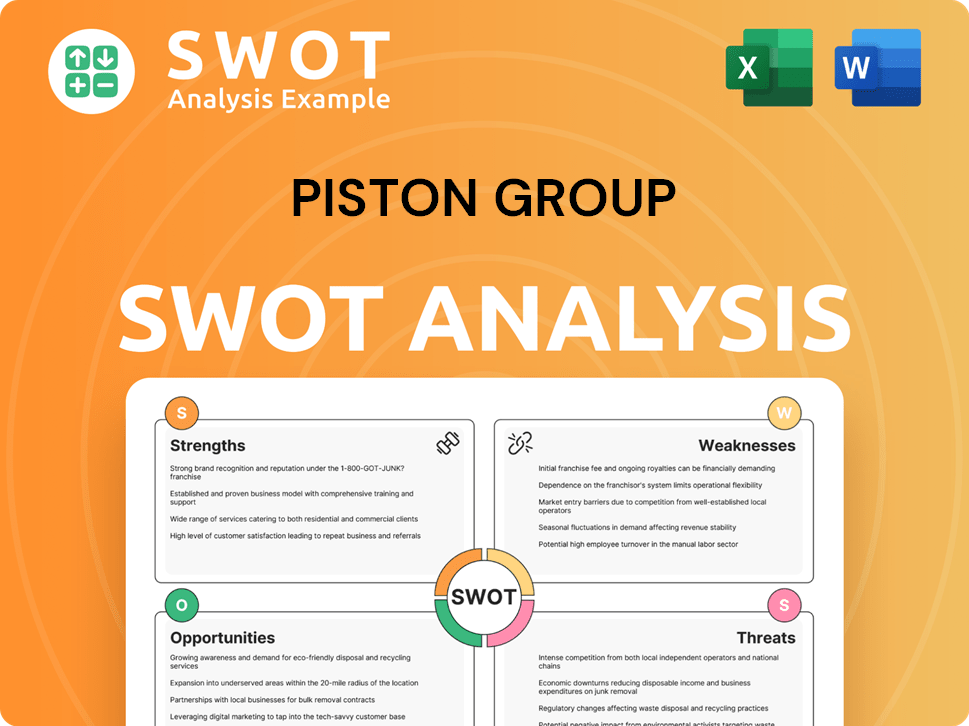
Piston Group SWOT Analysis
- Complete SWOT Breakdown
- Fully Customizable
- Editable in Excel & Word
- Professional Formatting
- Investor-Ready Format
What Drove the Early Growth of Piston Group?
The early growth and expansion of the Piston Group, a prominent automotive supplier, were marked by strategic initiatives. This included launching new products, opening manufacturing facilities, and forming key joint ventures. These steps helped the company quickly establish itself in the automotive industry. The company's journey began in 1995, setting the stage for significant growth.
 Early Milestones
In 1997, the company hosted the White House Community Empowerment Conference, highlighting its early impact. By 1998, the team had grown to over 150 employees, demonstrating early success. These initial steps were crucial for the future of the manufacturing company.
Facility Expansion
The company expanded its operational footprint across the Midwest. Key facility openings included Redford, MI (headquarters, 2004), Louisville, KY (2011), Liberty, MO (2007), Toledo, OH (2012), N. Kansas City, MO (expansion, 2013), Georgetown, KY (2017), Belvidere, IL (2017), Van Buren, MI (2018), and Marion, OH (acquired, 2019). Further expansion occurred in Wentzville, MO, and Louisville, KY in 2022.
Joint Ventures and Partnerships
Piston Group formed joint ventures to broaden its capabilities. These included JL Automotive with Lear in Highland Park, MI (2000), Piston Modules with Continental Teves in Detroit, MI (2001), and PASA Modules with ZF Sachs in Detroit, MI (2001). These collaborations enabled the company to undertake more complex projects.
Revenue Growth
Revenue grew significantly, from $1 million in 1996 to $326 million in 2010. By 2015, revenue reached $1.2 billion, increasing to $1.75 billion by 2017 and $2.86 billion by 2018. In 2023, revenue reached $3.4 billion, and in 2024, it was reported at $3.1 billion, reflecting strong market reception.
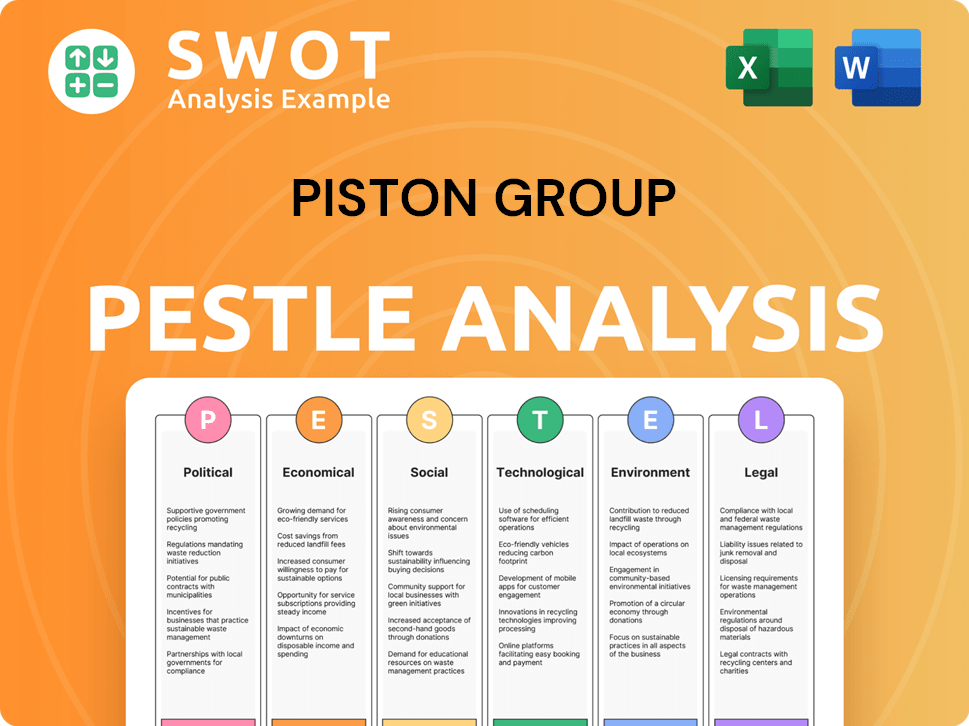
Piston Group PESTLE Analysis
- Covers All 6 PESTLE Categories
- No Research Needed – Save Hours of Work
- Built by Experts, Trusted by Consultants
- Instant Download, Ready to Use
- 100% Editable, Fully Customizable
What are the key Milestones in Piston Group history?
The Piston Group has achieved significant milestones throughout its history, evolving from a small manufacturer into a major player in the automotive industry. The Piston Group company has consistently grown, becoming the largest African American-owned automotive supplier in the U.S., with a substantial market presence.
| Year | Milestone |
|---|---|
| Early Years | Founded as a small manufacturing entity, laying the groundwork for future expansion within the automotive industry. |
| Ongoing | Consistent growth and expansion of capabilities within the automotive sector. |
| 2023 | Achieved a revenue of $3.4 billion, demonstrating significant financial success. |
| 2024 | Reported a revenue of $3.1 billion, reflecting its continued market presence. |
| Recent | Expansion into hydrogen fuel cell manufacturing, positioning the company at the forefront of zero-emission vehicle production. |
Piston Group has expanded its capabilities to include complex assembly, manufacturing, and engineering solutions for a wide range of automotive parts and systems. A notable innovation is the company's move into hydrogen fuel cell manufacturing, supported by a grant and a significant contract to produce hydrogen fuel cells.

Powertrain Components
The company manufactures and supplies a variety of powertrain components, essential for vehicle performance and efficiency. These components are critical for both traditional combustion engines and emerging electric vehicle technologies.
Electrical Parts
Piston Group produces and supplies a range of electrical parts, including wiring harnesses and electronic modules, vital for vehicle functionality. These components are crucial for modern vehicle systems, including safety and infotainment.
Chassis Components
The company manufactures and supplies chassis components, such as suspension parts and brake systems, which are essential for vehicle handling and safety. These components are critical for vehicle stability and ride quality.
Interior Technologies
Piston Group offers interior technologies, including seating systems and trim components, enhancing vehicle comfort and aesthetics. These technologies are crucial for creating a comfortable and appealing driving experience.
Hydrogen Fuel Cell Manufacturing
The company is investing in hydrogen fuel cell manufacturing, supported by a grant and a significant contract. This initiative positions Piston Group at the forefront of zero-emission vehicle production, contributing to sustainable transportation solutions.
Advanced Assembly and Engineering Solutions
Piston Group provides advanced assembly and engineering solutions, including complex manufacturing processes and innovative designs. This enhances its ability to meet the evolving needs of the automotive industry.
Piston Group has faced challenges, including a nearly four-year legal dispute concerning its minority certification, though a Detroit judge has repeatedly upheld its certification. Also, the company has addressed internal operational challenges, such as replacing a legacy ERP system to improve business processes.
Legal Disputes
The company has navigated a nearly four-year legal dispute concerning its minority certification, which required significant resources and strategic responses. Despite these challenges, Piston Group has successfully defended its certifications.
COVID-19 Pandemic
Like many businesses, the company faced unexpected challenges from the COVID-19 pandemic, requiring adaptability and a focus on employee well-being. This period demanded resilience and strategic adjustments to maintain operations.
Legacy ERP System Replacement
The company has replaced a legacy ERP system to improve business processes, decrease risk from manual operations, and enhance inventory transparency. This upgrade has streamlined operations and improved efficiency.
Supply Chain Disruptions
The company has managed supply chain disruptions, which have impacted the automotive industry, requiring proactive measures. This has involved diversifying suppliers and optimizing inventory management.
Market Volatility
Piston Group has navigated market volatility, including fluctuations in demand and shifts in consumer preferences. This has required strategic agility and responsiveness to market trends.
Competition
The company operates in a competitive environment, requiring continuous innovation and efficiency improvements. For a deeper understanding of the competitive landscape, explore the Competitors Landscape of Piston Group.
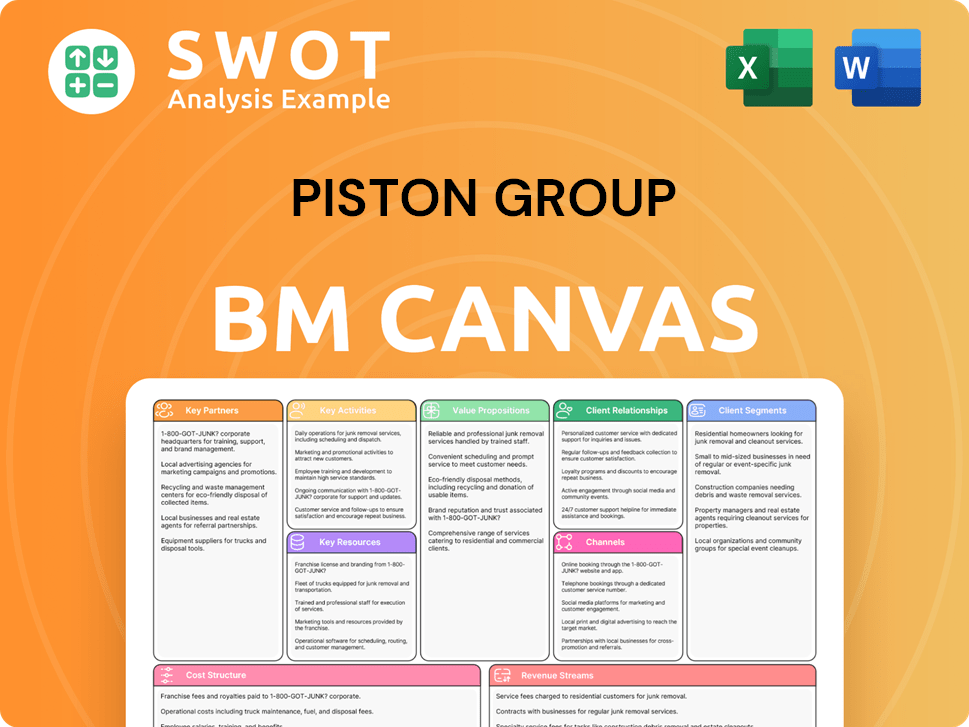
Piston Group Business Model Canvas
- Complete 9-Block Business Model Canvas
- Effortlessly Communicate Your Business Strategy
- Investor-Ready BMC Format
- 100% Editable and Customizable
- Clear and Structured Layout
What is the Timeline of Key Events for Piston Group?
The Piston Group history is a story of strategic growth and expansion in the automotive sector. Founded in 1995 by Vinnie Johnson, the company has evolved from its beginnings in Southfield, Michigan, into a significant automotive supplier with multiple facilities and a broad range of services. This evolution is marked by key investments, joint ventures, and acquisitions, reflecting its commitment to innovation and market leadership. The company's dedication to community engagement and its strategic focus on advanced technologies, such as hydrogen fuel cell manufacturing, further highlight its forward-thinking approach.
| Year | Key Event |
|---|---|
| 1995 | Vinnie Johnson founded Piston Group in Southfield, Michigan. |
| 1996 | Investments began, establishing Piston Automotive. |
| 1997 | Piston Automotive hosted the White House Community Empowerment Conference. |
| 2000 | Launched JL Automotive, a joint venture with Lear in Highland Park, MI. |
| 2001 | Launched Piston Modules (JV with Continental Teves) and PASA Modules (JV with ZF Sachs) in Detroit, MI. |
| 2004 | The Redford, MI facility opened, becoming Piston Automotive Headquarters. |
| 2011 | Louisville, KY facility opened. |
| 2013 | N. Kansas City, MO facility expanded. |
| 2017 | Belvidere, IL and Georgetown, KY facilities opened. |
| 2018 | Van Buren, MI facility opened, with a $16.7 million capital investment and 118 new jobs. |
| 2019 | Marion, OH facility acquired. |
| 2020 | Piston Group donated $1 million to the Pope Francis Center in Detroit. |
| 2022 | Wentzville, MO facility opened and Louisville, KY facility expanded. |
| 2023 | Revenue reached $3.4 billion. |
| 2024 | Revenue reported at $3.1 billion. Mamadou Diallo appointed CEO. Piston Automotive announced new president, Jana Rosenmann. |
| 2024 (Jan) | Piston Automotive announced planned hydrogen fuel cell manufacturing facility in Detroit, a $55 million capital investment creating 144 new jobs, supported by a $1.5 million grant. |
| 2025 (May) | Jana Rosenmann recognized among 100 Leading Women in the North American Auto Industry. |
Hydrogen Fuel Cell Manufacturing
The company's move into hydrogen fuel cell manufacturing is a key strategic initiative. This investment reflects a commitment to zero-emission vehicle technology. The planned facility in Detroit, with a $55 million capital investment, indicates a proactive approach to emerging trends in the automotive sector.
Market Growth and Trends
The automotive piston market is expected to grow. It is projected to increase from $4.51 billion in 2025 to $5.67 billion by 2029, with a CAGR of 5.9%. This growth is driven by stricter emissions regulations and demand for fuel-efficient engines. The global automotive piston system market is anticipated to reach $3.43 billion by the end of 2035.
Strategic Initiatives and Leadership
Piston Group is focused on long-term strategic initiatives. The company's leadership is committed to growth and innovation. This includes a focus on operational excellence and customer value, positioning the company to capitalize on trends in advanced mobility.
Competitive Advantage
As a Tier 1 supplier, Piston Group holds a strong position in the automotive industry. This established position enables the company to maintain a competitive edge. The company's ability to adapt to emerging trends, such as zero-emission vehicles, supports its long-term success.
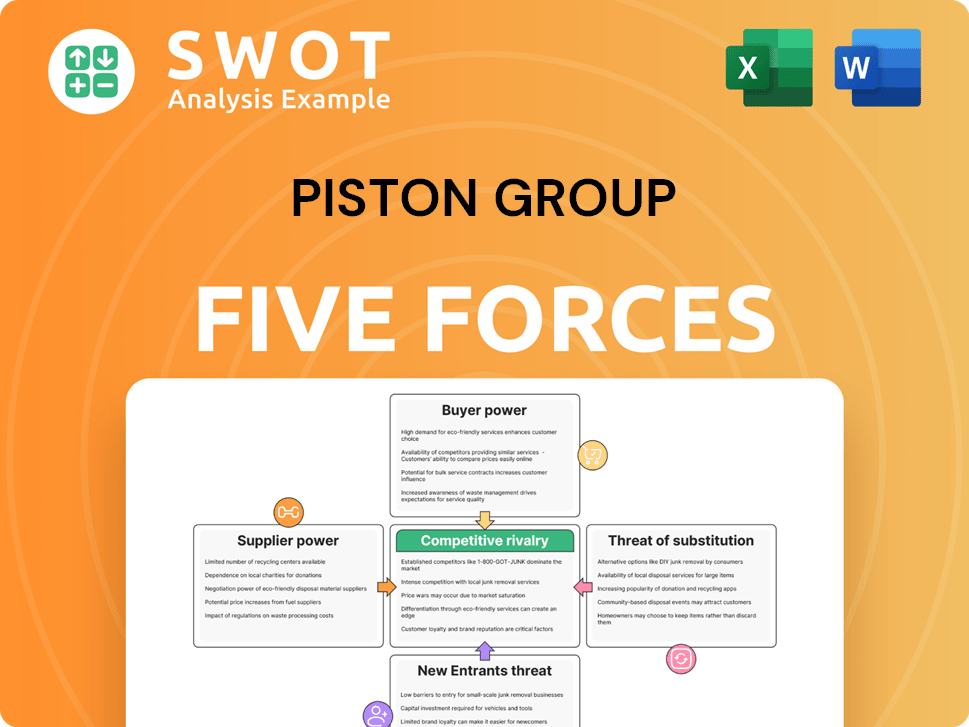
Piston Group Porter's Five Forces Analysis
- Covers All 5 Competitive Forces in Detail
- Structured for Consultants, Students, and Founders
- 100% Editable in Microsoft Word & Excel
- Instant Digital Download – Use Immediately
- Compatible with Mac & PC – Fully Unlocked
Related Blogs

- What is Competitive Landscape of Piston Group Company?
- What is Growth Strategy and Future Prospects of Piston Group Company?
- How Does Piston Group Company Work?
- What is Sales and Marketing Strategy of Piston Group Company?
- What is Brief History of Piston Group Company?
- Who Owns Piston Group Company?
- What is Customer Demographics and Target Market of Piston Group Company?
Disclaimer
All information, articles, and product details provided on this website are for general informational and educational purposes only. We do not claim any ownership over, nor do we intend to infringe upon, any trademarks, copyrights, logos, brand names, or other intellectual property mentioned or depicted on this site. Such intellectual property remains the property of its respective owners, and any references here are made solely for identification or informational purposes, without implying any affiliation, endorsement, or partnership.
We make no representations or warranties, express or implied, regarding the accuracy, completeness, or suitability of any content or products presented. Nothing on this website should be construed as legal, tax, investment, financial, medical, or other professional advice. In addition, no part of this site—including articles or product references—constitutes a solicitation, recommendation, endorsement, advertisement, or offer to buy or sell any securities, franchises, or other financial instruments, particularly in jurisdictions where such activity would be unlawful.
All content is of a general nature and may not address the specific circumstances of any individual or entity. It is not a substitute for professional advice or services. Any actions you take based on the information provided here are strictly at your own risk. You accept full responsibility for any decisions or outcomes arising from your use of this website and agree to release us from any liability in connection with your use of, or reliance upon, the content or products found herein.