

Omega Bundle

How did Omega Healthcare Investors become a healthcare real estate giant?
Omega Healthcare Investors, Inc. isn't just another REIT; it's a story of strategic vision in the long-term healthcare space. Founded in 1992, this company carved a unique path, starting with a distinctive approach to funding its operations. From its initial days on the NYSE, Omega has grown significantly, showcasing remarkable adaptability.

Omega's journey showcases its commitment to the healthcare sector, evolving from financing solutions to a vast portfolio of properties. Today, with a market capitalization of $10.48 billion as of May 2025, Omega's impact is undeniable. For a deeper dive into their strategic positioning, consider exploring the Omega SWOT Analysis.
What is the Omega Founding Story?
The story of Omega Healthcare Investors, Inc. began in 1992. It was a unique start, spearheaded by Essel Bailey Jr., who initiated the company using a method similar to what we now recognize as a Special Purpose Acquisition Company (SPAC).
This approach was a departure from the norm, using the initial public offering to gather capital for an immediate acquisition rather than supporting an existing entity. This innovative strategy allowed Omega to quickly establish its presence and begin its operations.
With a starting capital of just $400,000, Omega secured a deal to acquire 37 skilled nursing facilities for $120 million. This bold move set the stage for the company's listing on the New York Stock Exchange. The core business model revolved around providing lease or mortgage financing to skilled nursing facility operators, and to a lesser extent, assisted living and acute care facilities, mainly within the United States. This strategy was designed to generate income from these healthcare properties.

Early Days and Strategic Focus
Omega's early strategy focused on financial support for skilled nursing facilities.
- Founded in 1992 by Essel Bailey Jr.
- Initial focus on lease or mortgage financing.
- Targeted skilled nursing, assisted living, and acute care facilities.
- Listed on the New York Stock Exchange.
The company's early focus was on providing financial solutions to the healthcare sector, specifically targeting skilled nursing facilities. This strategic direction helped Omega establish a foundation for growth and expansion within the healthcare real estate market. The company's approach allowed it to capitalize on the increasing demand for healthcare services and the need for financing in the sector.
Financial Performance and Market Position
Omega's financial performance has been a key indicator of its success.
- Generated income from healthcare properties.
- Focused on the US market.
- Strategic financial moves.
- Demonstrated growth and market adaptation.
Omega's financial performance and market position have been shaped by its strategic focus and operational efficiency. The company's ability to generate income from healthcare properties, combined with its targeted approach in the US market, has been crucial to its success. The company's strategic financial moves have allowed it to adapt to market changes and maintain a strong position in the healthcare real estate sector. For more information on the company's target market, you can read this article: Target Market of Omega.
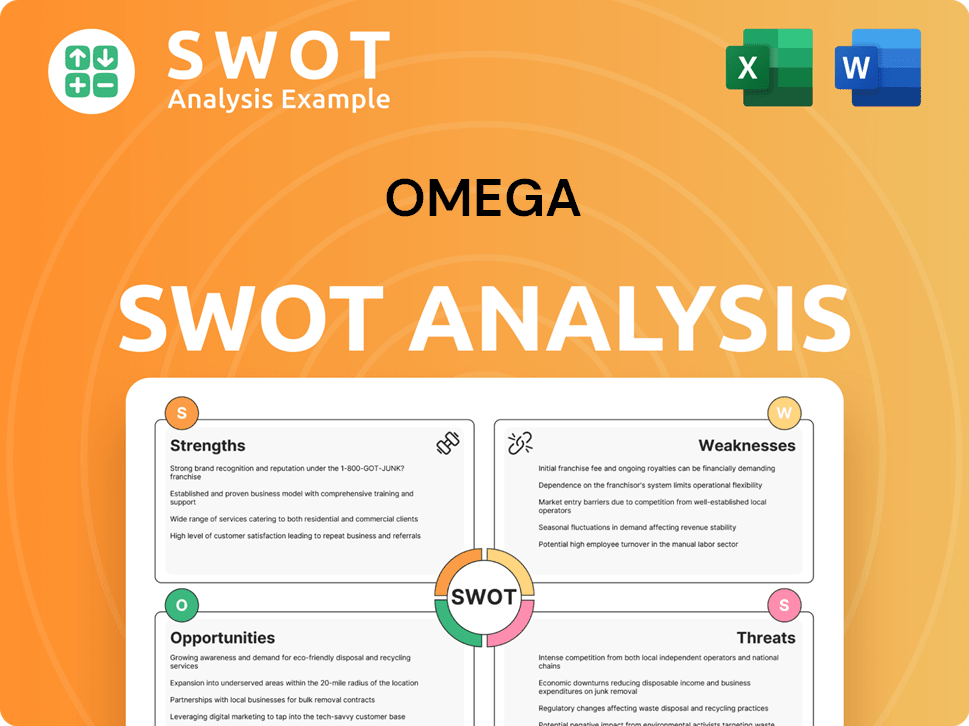
Omega SWOT Analysis
- Complete SWOT Breakdown
- Fully Customizable
- Editable in Excel & Word
- Professional Formatting
- Investor-Ready Format
What Drove the Early Growth of Omega?
The early years of the Omega company saw rapid expansion. From its founding until 1998, the company's stock price nearly doubled, and its portfolio grew significantly. However, this growth was not without its challenges, particularly from changes in government reimbursement structures.
 Initial Growth and Challenges
The initial phase of Omega's growth, from its introduction in 1992 to 1998, was marked by substantial portfolio expansion. During this period, the stock price nearly doubled, and the portfolio grew to over 250 properties. However, the long-term care industry faced significant challenges, including changes in government reimbursement structures, which impacted Omega's stock price, causing it to fall below $2 per share by 2001.
Restructuring and Leadership Transition
In response to financial difficulties, Explorer Holdings provided a $100 million equity infusion in July 2000. This period also saw a leadership transition, with Taylor Pickett joining as CEO in 2001. The focus shifted to restoring properties to profitability and deleveraging the balance sheet. This strategic shift was crucial for the company's long-term sustainability. Learn more about the Owners & Shareholders of Omega.
Sustained Growth and Acquisitions
From 2004 onwards, Omega embarked on a period of sustained growth, driven by key acquisitions. The Capital Source Acquisition in 2010 and the merger with Aviv REIT in 2015 were significant milestones. The company also expanded its geographic footprint, entering the United Kingdom market, which presented opportunities similar to the U.S. market decades prior.
Financial Performance and Recent Developments
By 2024, Omega reported total revenues of $1.05 billion, an increase from $949.7 million in 2023, primarily due to rental income growth. In 2024, the company acquired 114 facilities for $740.5 million, including the remaining 51% interest in the Cindat Joint Venture, consolidating its ownership of 63 facilities in the U.K. These acquisitions highlight the company's continued expansion and financial health.
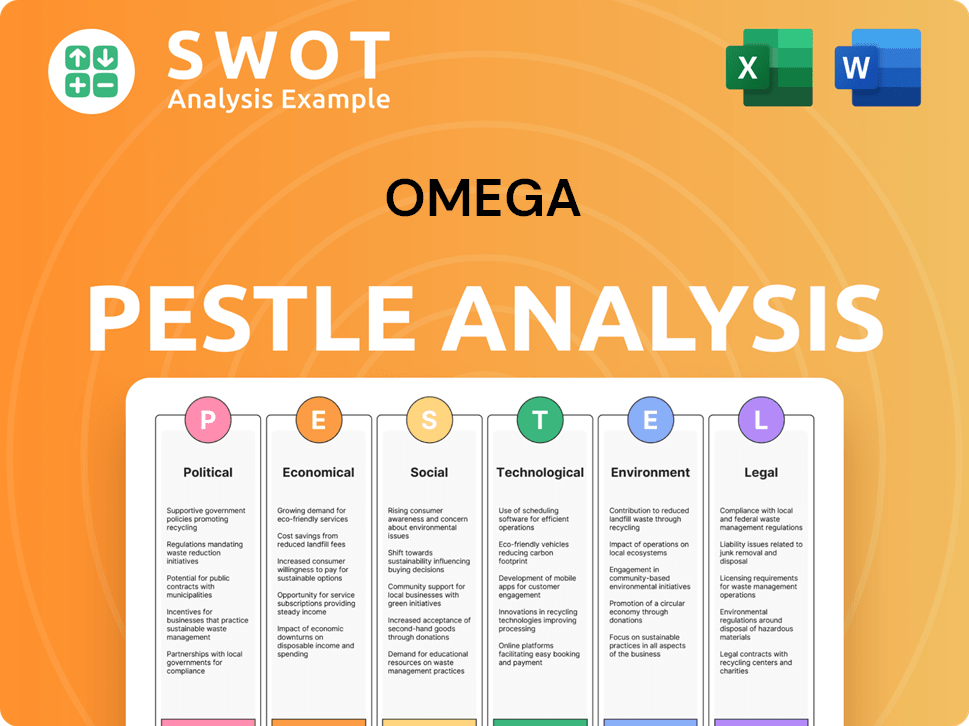
Omega PESTLE Analysis
- Covers All 6 PESTLE Categories
- No Research Needed – Save Hours of Work
- Built by Experts, Trusted by Consultants
- Instant Download, Ready to Use
- 100% Editable, Fully Customizable
What are the key Milestones in Omega history?
The history of the Omega company is marked by significant milestones that have shaped its trajectory in the luxury watch market. These achievements reflect its growth, strategic adaptations, and enduring presence in the watchmaking industry.
| Year | Milestone |
|---|---|
| 1848 | Founded in La Chaux-de-Fonds, Switzerland, by Louis Brandt, marking the beginning of the company's watchmaking heritage. |
| 1903 | The company officially adopted the name Omega, a testament to its precision and quality. |
| 1932 | Omega was chosen as the official timekeeper for the Olympic Games, a role that significantly enhanced its reputation. |
| 1948 | The introduction of the Omega Seamaster, a durable and elegant watch designed for both professional and leisure use. |
| 1957 | Launch of the Omega Speedmaster, a chronograph watch that would later become iconic for its role in space exploration. |
| 1969 | The Omega Speedmaster became the first watch worn on the moon, solidifying its place in history and popularizing the brief history of Omega Speedmaster. |
| 1999 | Omega introduced the Co-Axial escapement, a significant innovation in watch movements, enhancing precision and longevity. |
Omega has consistently demonstrated its commitment to innovation, particularly in the realm of watch movements and design. The company's advancements in technology and aesthetics have set new standards within the luxury watches market.

Co-Axial Escapement
Omega's Co-Axial escapement, introduced in 1999, revolutionized watchmaking by reducing friction and increasing the longevity of its watches. This innovation improved the precision and reliability of Omega watch movements.
Master Chronometer Certification
Omega's Master Chronometer certification, developed in collaboration with METAS (Swiss Federal Institute of Metrology), sets new standards for accuracy and resistance to magnetic fields. This certification ensures that Omega watches meet rigorous performance criteria.
Material Innovation
Omega has been at the forefront of using innovative materials, such as ceramic and Liquidmetal, in its watch designs. These materials enhance the durability and aesthetic appeal of Omega watches.
Design Evolution
The evolution of Omega logos and watch designs reflects the brand's ability to adapt to changing trends while maintaining its core values. Omega has consistently updated its collections to appeal to a broad audience.
Strategic Partnerships
Omega's strategic partnerships with various organizations and events, including the Olympic Games and space agencies, have enhanced its brand visibility and credibility. These collaborations have helped Omega reach new audiences.
Manufacturing Process
Omega's commitment to precision watchmaking is evident in its meticulous manufacturing process, which integrates both traditional craftsmanship and advanced technology. The company ensures that each watch meets the highest quality standards.
Despite its successes, the Omega company has faced challenges, including economic downturns and shifts in consumer preferences. Navigating these obstacles has required strategic adjustments and a focus on maintaining its brand identity.
Economic Downturns
Economic recessions can impact the luxury watches market, affecting consumer spending and demand. Omega has had to adapt to changing economic conditions to maintain its market position.
Competition
The luxury watch market is highly competitive, with numerous brands vying for consumer attention. Omega must continually innovate and differentiate itself to stay ahead of its competitors.
Changing Consumer Preferences
Consumer tastes and preferences evolve over time, requiring Omega to adapt its product offerings and marketing strategies. Omega must stay relevant by understanding and responding to these changes.
Supply Chain Disruptions
Global events and economic factors can disrupt the supply chain, affecting the availability of components and finished products. Omega must manage its supply chain effectively to mitigate these risks.
Counterfeit Products
The prevalence of counterfeit products poses a threat to the brand's reputation and sales. Omega invests in measures to combat counterfeiting and protect its brand image.
Market Fluctuations
Fluctuations in currency exchange rates and global economic conditions can impact sales and profitability. Omega must manage these financial risks effectively.
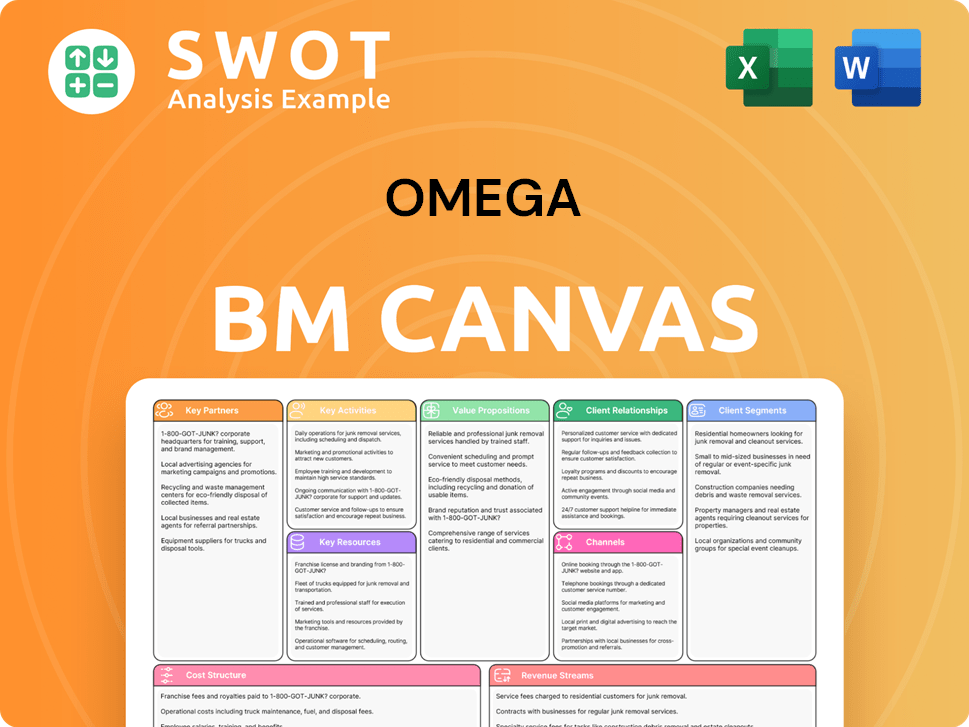
Omega Business Model Canvas
- Complete 9-Block Business Model Canvas
- Effortlessly Communicate Your Business Strategy
- Investor-Ready BMC Format
- 100% Editable and Customizable
- Clear and Structured Layout
What is the Timeline of Key Events for Omega?
The journey of Omega Healthcare Investors is marked by strategic expansions and pivotal leadership changes. Founded in 1992, the company has grown significantly through acquisitions and market adaptations. Key milestones include Taylor Pickett becoming CEO in 2001, the Capital Source Acquisition in 2010, and the merger with Aviv REIT in 2015. Recent developments include the acquisition of MedEquities Realty Trust, Inc. in 2019 and significant acquisitions in 2024 and 2025, alongside leadership transitions and strategic financial moves. The company has consistently aimed at enhancing its portfolio and market position. This evolution reflects Omega's commitment to growth and its ability to adapt within the healthcare real estate sector.
| Year | Key Event |
|---|---|
| 1992 | Omega Healthcare Investors, Inc. is founded and lists on the New York Stock Exchange. |
| 2001 | Taylor Pickett assumes the role of CEO, initiating a period of recovery and growth. |
| 2010 | The company completes the Capital Source Acquisition, expanding its portfolio. |
| 2015 | Omega merges with Aviv REIT, further solidifying its market position. |
| 2019 | Omega acquires MedEquities Realty Trust, Inc. for $600 million, adding new asset types. |
| 2024 | Reports total revenues of $1.05 billion and net income of $417.8 million for the year. Completes $740.5 million in acquisitions, including consolidating ownership of 63 U.K. facilities. |
| January 2025 | Matthew Gourmand is appointed President and Vikas Gupta is appointed Chief Investment Officer as part of leadership transitions. The company repays $400 million of senior unsecured notes. |
| February 2025 | The Inspir Embassy Row development in Washington D.C. is placed into service. Omega reports fourth quarter and full year 2024 results. |
| March 2025 | Genesis Healthcare, Inc. fails to make a rent payment, though Omega draws on collateral. |
| April 2025 | Omega acquires 45 facilities in the U.K. and Jersey for approximately $344 million. The company also extends its $1.45 billion unsecured revolving credit facility to October 2025. |
| May 2025 | Omega reports strong first-quarter 2025 results, with net income of $112 million, up from $69 million in Q1 2024, and Adjusted Funds From Operations (AFFO) of $221 million, compared to $176 million in the prior year. The company raises its full-year 2025 Adjusted FFO guidance to between $2.95 and $3.01 per diluted share. |
Growth Strategy
Omega Healthcare Investors plans to continue its acquisition-driven operating model, with historical acquisitions ranging from $400 million to $1 billion annually. The company aims to leverage its capital structure for investment activities. This approach supports sustained growth and enhances shareholder value.
Market Outlook
The aging population is expected to drive increased demand for skilled nursing care, providing a '20+ year secular tailwind' for the industry. Analyst predictions for 2025 Core FFO estimates range from $2.93 to $3.00 per share, with 2026 projections around $3.04 to $3.05 per share. Omega is strategically positioned to benefit from these market dynamics.
Financial Planning
Omega plans to position itself with sufficient cash by year-end 2025 to repay its $600 million bond maturity in January 2026. The company is focused on maintaining solid dividend growth. This financial discipline supports the company's long-term goals and ensures financial stability.
Strategic Initiatives
The company's strategic initiatives include continued growth through accretive investments. Omega focuses on being a premier capital partner in the long-term healthcare industry. For more insights on the competitive landscape, consider reading about the Competitive Analysis of Omega.
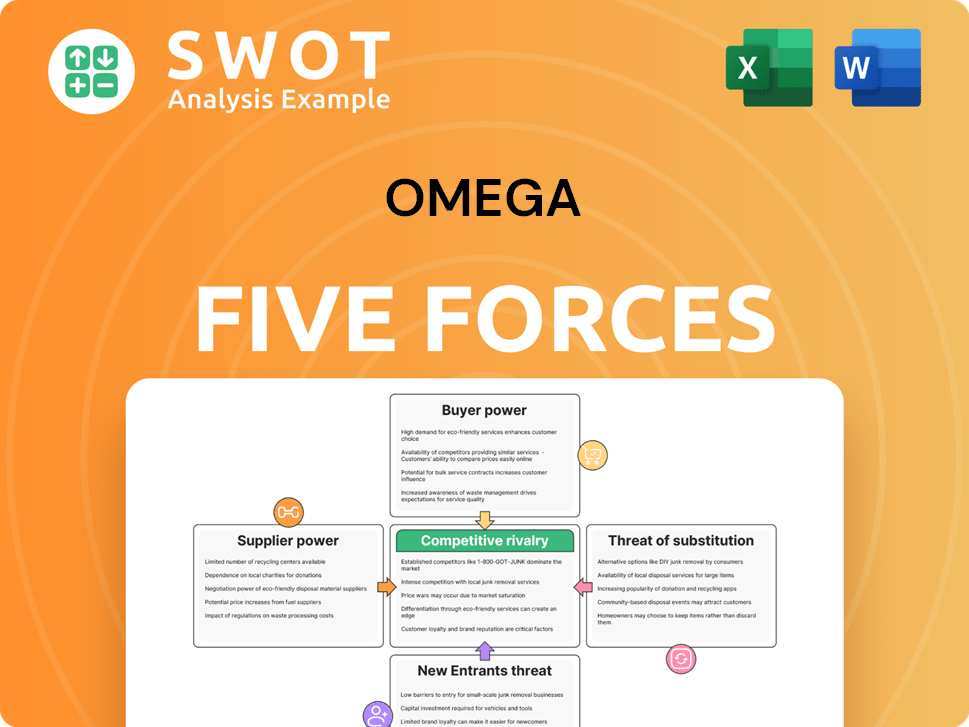
Omega Porter's Five Forces Analysis
- Covers All 5 Competitive Forces in Detail
- Structured for Consultants, Students, and Founders
- 100% Editable in Microsoft Word & Excel
- Instant Digital Download – Use Immediately
- Compatible with Mac & PC – Fully Unlocked
Related Blogs

- What is Competitive Landscape of Omega Company?
- What is Growth Strategy and Future Prospects of Omega Company?
- How Does Omega Company Work?
- What is Sales and Marketing Strategy of Omega Company?
- What is Brief History of Omega Company?
- Who Owns Omega Company?
- What is Customer Demographics and Target Market of Omega Company?
Disclaimer
All information, articles, and product details provided on this website are for general informational and educational purposes only. We do not claim any ownership over, nor do we intend to infringe upon, any trademarks, copyrights, logos, brand names, or other intellectual property mentioned or depicted on this site. Such intellectual property remains the property of its respective owners, and any references here are made solely for identification or informational purposes, without implying any affiliation, endorsement, or partnership.
We make no representations or warranties, express or implied, regarding the accuracy, completeness, or suitability of any content or products presented. Nothing on this website should be construed as legal, tax, investment, financial, medical, or other professional advice. In addition, no part of this site—including articles or product references—constitutes a solicitation, recommendation, endorsement, advertisement, or offer to buy or sell any securities, franchises, or other financial instruments, particularly in jurisdictions where such activity would be unlawful.
All content is of a general nature and may not address the specific circumstances of any individual or entity. It is not a substitute for professional advice or services. Any actions you take based on the information provided here are strictly at your own risk. You accept full responsibility for any decisions or outcomes arising from your use of this website and agree to release us from any liability in connection with your use of, or reliance upon, the content or products found herein.