

Ingram Industries Bundle

How did Ingram Industries evolve from lumber to a global powerhouse?
Embark on a fascinating journey through the Ingram Industries SWOT Analysis, a company that began with humble roots and blossomed into a diversified conglomerate. Discover the strategic pivots and bold decisions that shaped Ingram Industries, transforming it from a lumber business into a multifaceted enterprise. Explore how this privately held company has navigated the complexities of American industry and achieved remarkable success.

This article delves into the Ingram Company History, exploring the Ingram Group's significant milestones and its impact on industries ranging from marine transportation, specifically the Ingram Barge Company, to global content distribution. We'll examine the Ingram Industries business model and its strategic moves. Understand the Ingram Industries current operations and its lasting legacy.
What is the Ingram Industries Founding Story?
The story of Ingram Industries began with the Ingram family's existing business ventures. Though formally incorporated in 1978, the roots of the company stretch back to 1938 with the establishment of the Wood River Oil and Refining Company. This initial venture set the stage for a diversified conglomerate.
E. Bronson Ingram II played a crucial role in the company's early development. After graduating from Vanderbilt University in 1946, he joined his father, Orrin Henry Ingram Sr., in the family's lumber business in Nashville, Tennessee. This marked a significant turning point, laying the foundation for the company's future expansion and diversification.
The Ingram family likely saw potential beyond traditional lumber, leading to diversification. Orrin Henry Ingram Sr. expanded into oil and refining in the late 1920s and 1930s. By the 1950s, the Ingram Oil & Refining Company was formed. A key strategic move was entering the barge business in 1946 to transport crude oil to its St. Louis refinery, which set the stage for one of Ingram Industries' core businesses.

Ingram Industries' Founding and Early Growth
Ingram Industries' history is a story of diversification and strategic expansion, starting with the lumber business and evolving into oil, refining, and marine transportation.
- The company's name changed over time, from Wood River Oil and Refining Company to Ingram Corporation in 1963.
- The change to Ingram Industries, Inc. in 1978 reflected the increasingly diverse nature of the company's activities.
- As a privately held family business, initial funding came from the profits and assets of these expanding ventures.
- Ingram Industries' strategic moves, such as entering the barge business, were critical to its growth.
The company's evolution reflects its growth. Initially, it was known as the Wood River Oil and Refining Company. Following the death of O.H. Ingram and the takeover by his sons, Frederic and Bronson, the company became Ingram Corporation in 1963. The shift to Ingram Industries, Inc. in 1978 mirrored the increasing diversity of its operations. The initial funding for this privately held family business came from the profits and assets generated by these expanding ventures. For more insights into the company's ownership structure, check out this article: Owners & Shareholders of Ingram Industries.
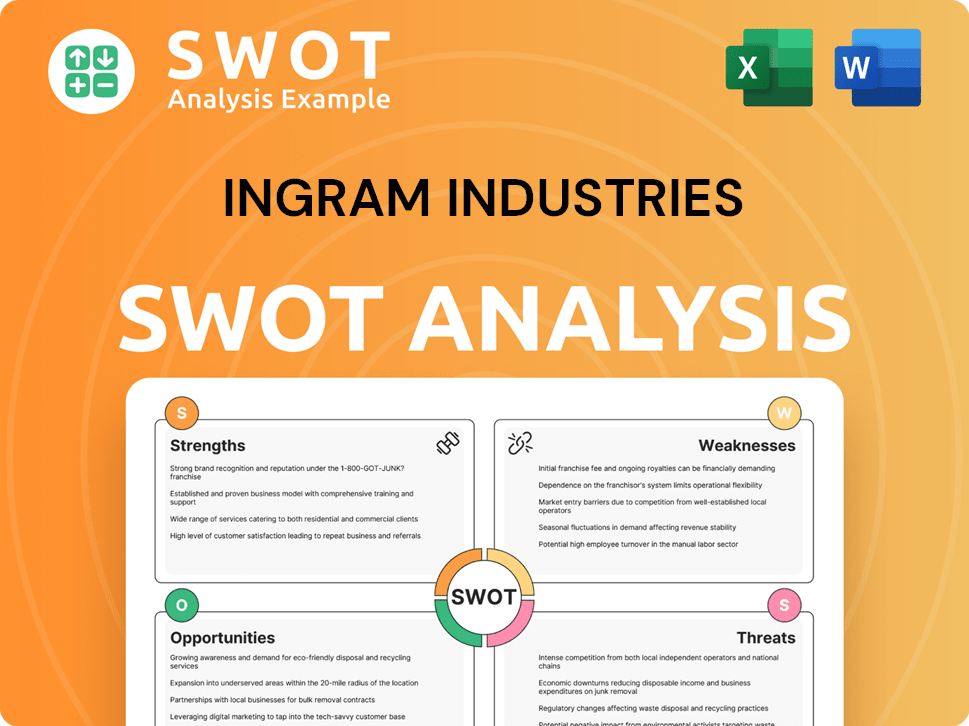
Ingram Industries SWOT Analysis
- Complete SWOT Breakdown
- Fully Customizable
- Editable in Excel & Word
- Professional Formatting
- Investor-Ready Format
What Drove the Early Growth of Ingram Industries?
Following its formal incorporation in 1978, Ingram Industries experienced substantial growth and diversification under E. Bronson Ingram II's leadership. This period saw strategic entries into new markets and significant acquisitions that shaped the company's trajectory. The company expanded its presence across several sectors, including marine transportation, book distribution, and computer products, transforming it into a diversified conglomerate.
 Ingram Barge Company's Rise
A key early move was entering the inland marine transportation industry in the 1970s. E.B. Ingram acquired his first fleet of barges, which led to the growth of Ingram Barge Company. This company became one of the largest barge companies in the United States, transporting bulk commodities along the Mississippi River and its tributaries.
Expansion in Book Distribution
Ingram Industries also grew its book distribution sector. Ingram Book Company was officially established in 1970 to handle trade book distribution. Starting with sales of $1 million and 18 employees, it became Ingram Content Group, a major player in global book and digital content distribution. The acquisition of Tennessee Book Company in the mid-1960s further aided expansion.
Diversification through Acquisitions
A notable acquisition was Micro D, Inc., a computer products distributor, in 1989. This strategic move into the microcomputer industry led to Ingram Micro D, which quickly became the industry's first $1 billion computer products wholesale distribution company. By 1991, it was renamed Ingram Micro and expanded globally.
Early Milestones and Strategic Moves
The early growth of Ingram Industries was marked by strategic acquisitions and expansions. The acquisition of Tennessee Insurance Company in the mid-1960s also diversified the company's portfolio. These moves across marine, book, and computer distribution were crucial in shaping Ingram Industries' trajectory.
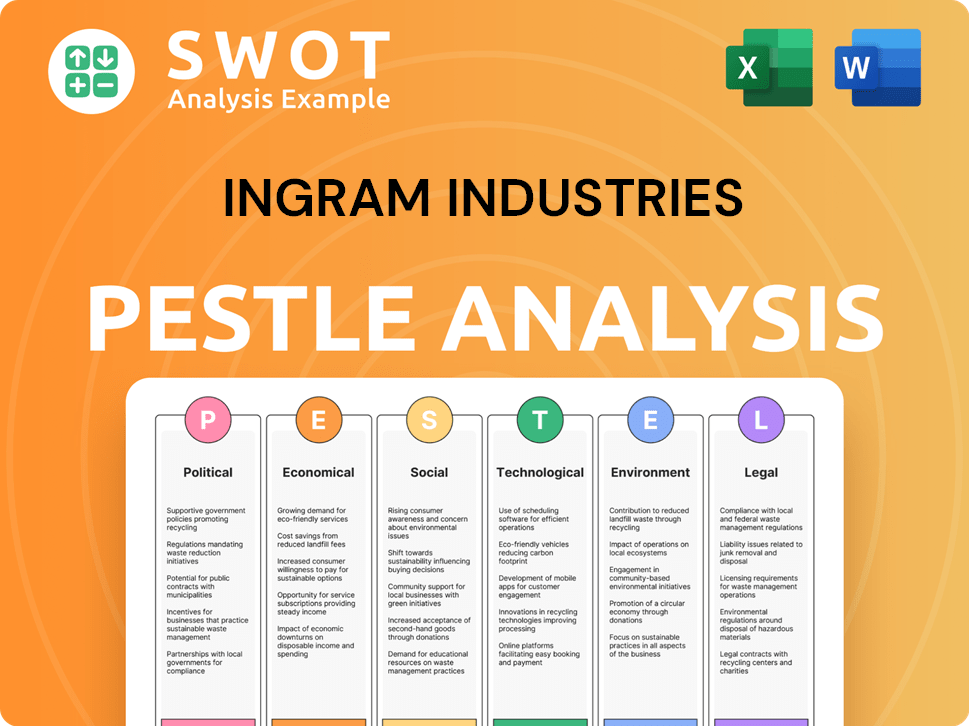
Ingram Industries PESTLE Analysis
- Covers All 6 PESTLE Categories
- No Research Needed – Save Hours of Work
- Built by Experts, Trusted by Consultants
- Instant Download, Ready to Use
- 100% Editable, Fully Customizable
What are the key Milestones in Ingram Industries history?
The brief history of Ingram Industries company is marked by significant milestones, including strategic shifts and expansions across diverse sectors. These achievements have shaped the company's trajectory and its position in the market.
| Year | Milestone |
|---|---|
| 1970 | Ingram Book Company was formed, expanding the book distribution unit. |
| 1996 | Following the death of Bronson Ingram, Martha Rivers Ingram took over leadership and oversaw a major reorganization. |
| 1997 | Lightning Source, later known as Lightning Print, was launched, revolutionizing the industry with print-on-demand capabilities. |
| 2024 | Ingram Marine Group announced the creation of Ingram Infrastructure Group LLC, expanding its material handling and supply chain solutions. |
Ingram Industries has consistently embraced innovation to stay ahead in its various business segments. The launch of Lightning Source was a groundbreaking move, and Ingram Micro's development of the Xvantage platform further demonstrates the company's commitment to technological advancement.

Print-on-Demand Revolution
Lightning Source, launched in 1997, revolutionized book publishing with its print-on-demand capabilities, enabling efficient production. This innovation significantly contributed to Ingram Content Group's revenue, with new businesses accounting for 64% of total revenue by 2020.
Ingram Micro Xvantage
Ingram Micro launched Xvantage, an AI-powered digital experience platform in September 2022. The platform aims to transform the company from a traditional distributor into a platform ecosystem company, enhancing B2B customer experiences.
Cloud Business Investment
Ingram Micro has invested over $600 million in its cloud business over the past decade. This investment supports initiatives aimed at enhancing its cloud offerings and digital capabilities.
The company has faced several challenges, including market downturns and competitive pressures. Ingram Content Group and Ingram Micro have adapted through strategic initiatives and restructuring to maintain their industry positions.
Market Fluctuations
Ingram Content Group experienced revenue dips due to changes in the retail market, but rebounded through strategic initiatives. This demonstrates the company's ability to adapt to changing market conditions.
Competitive Pressures
Ingram Micro faced competitive challenges, particularly in markets like India, but maintained its focus on growth through advanced solutions and cloud products. The company continues to innovate to stay competitive.
Restructuring Initiatives
Ingram Micro undertook restructuring initiatives in late 2024, reducing headcount by approximately 850 associates by Q1 2025. This was done to enhance organizational efficiency and strengthen customer service.
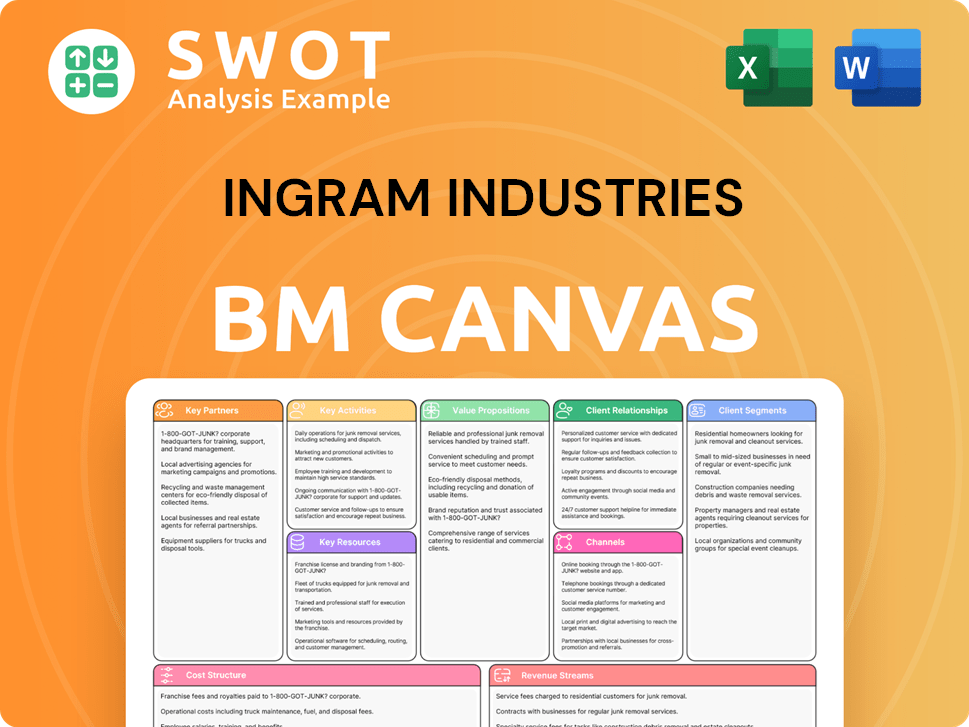
Ingram Industries Business Model Canvas
- Complete 9-Block Business Model Canvas
- Effortlessly Communicate Your Business Strategy
- Investor-Ready BMC Format
- 100% Editable and Customizable
- Clear and Structured Layout
What is the Timeline of Key Events for Ingram Industries?
The Ingram Industries company history is marked by strategic diversification and expansion across multiple sectors. The company's evolution began with the founding of Wood River Oil and Refining Company in 1938, later transforming into Ingram Industries. Key milestones include entering the book distribution business, the marine transportation industry, and the technology sector through Ingram Micro. These moves highlight the Ingram Group's ability to adapt and grow over time, establishing a diverse portfolio of Ingram Businesses.
| Year | Key Event |
|---|---|
| 1938 | Wood River Oil and Refining Company, a precursor to Ingram Industries, is founded. |
| 1946 | E. Bronson Ingram II joins his father's lumber business, marking the beginning of the diversified family enterprise. |
| 1963 | O.H. Ingram dies; his sons, Frederic and Bronson, take over and rename the company Ingram Corporation. |
| Mid-1960s | Ingram acquires Tennessee Book Company and enters the insurance industry with the purchase of Tennessee Insurance Company. |
| 1970 | Ingram Book Company is formed to handle trade book distribution. |
| 1970s | E.B. Ingram acquires his first fleet of barges, entering the inland marine transportation industry. |
| 1978 | The company is formally renamed Ingram Industries, Inc. |
| 1989 | Ingram Industries acquires computer distributor Micro D, leading to the creation of Ingram Micro D, later renamed Ingram Micro. |
| 1995 | Bronson Ingram dies; his wife, Martha Rivers Ingram, assumes leadership. |
| 1996 | Ingram Micro is spun off as a publicly traded company. |
| 1997 | Lightning Source, a pioneering print-on-demand service, is launched by Ingram Content Group. |
| 2002 | Ingram Industries acquires Midland Enterprises, significantly expanding its barge operations. |
| 2010 | Ingram Micro launches its Cloud Marketplace. |
| 2022 | Ingram Micro introduces its digital experience platform, Ingram Micro Xvantage. |
| February 2024 | Ingram Marine Group creates Ingram Infrastructure Group LLC through the acquisitions of Inland River Transport Holdings and NexStar Solutions. |
| October 2024 | Ingram Micro launches its second initial public offering, targeting $5.4 billion USD. |
| December 2024 | Ingram Micro undertakes restructuring initiatives to reduce headcount by approximately 850 associates by Q1 2025. |
| March 2025 | Ingram Micro reports Q4 2024 net sales of $13.34 billion, up 2.5% year-over-year, with full-year 2024 net sales of $48 billion. |
| April 2025 | Ingram Micro's Xvantage platform receives three iF Design Awards 2025 for user experience and innovation. |
| May 2025 | Ingram Micro reports Q1 2025 net sales of $12.3 billion, an 8.3% increase year-over-year. |
Ingram Marine Group's Expansion
Ingram Marine Group is investing nearly $50 million in the St. Louis region over the next three years. This investment aims to expand terminal operations and enhance multi-modal capabilities. These enhancements include barge-to-rail transfer systems, improving efficiency in inland waterways.
Ingram Micro's Transformation
Ingram Micro is transitioning from a traditional distributor to a 'platform ecosystem company'. The AI-powered Xvantage platform is central to this transformation. The platform is designed to reinvent the B2B customer experience and drive growth through advanced technology.
Financial Outlook for Ingram Micro
Ingram Micro forecasts net sales between $11.43 billion and $11.83 billion for Q1 2025. This reflects a projected 2.6% year-over-year growth at the midpoint. Analysts predict Ingram Micro Holding's earnings to grow by 26.2% per year over the next three years.
Key Strategies and Adaptations
The future of Ingram Industries hinges on adapting to market demands and leveraging technology. The company is focused on maintaining its strategic positions in diverse sectors. Leadership emphasizes continued investment in digital platforms to enhance efficiencies and drive revenue.
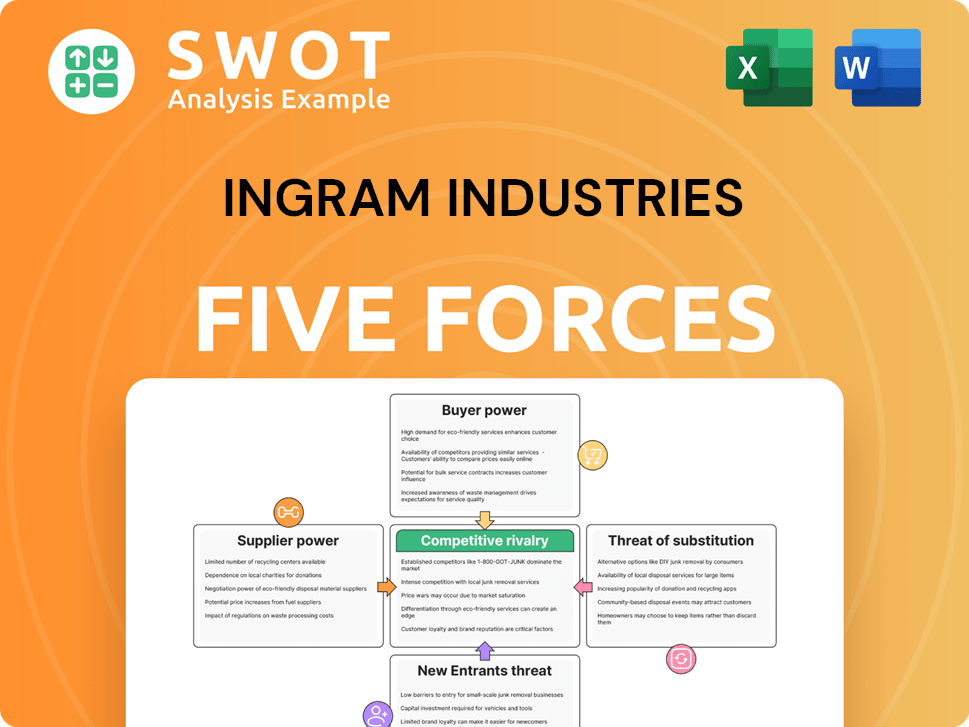
Ingram Industries Porter's Five Forces Analysis
- Covers All 5 Competitive Forces in Detail
- Structured for Consultants, Students, and Founders
- 100% Editable in Microsoft Word & Excel
- Instant Digital Download – Use Immediately
- Compatible with Mac & PC – Fully Unlocked
Related Blogs

- What is Competitive Landscape of Ingram Industries Company?
- What is Growth Strategy and Future Prospects of Ingram Industries Company?
- How Does Ingram Industries Company Work?
- What is Sales and Marketing Strategy of Ingram Industries Company?
- What is Brief History of Ingram Industries Company?
- Who Owns Ingram Industries Company?
- What is Customer Demographics and Target Market of Ingram Industries Company?
Disclaimer
All information, articles, and product details provided on this website are for general informational and educational purposes only. We do not claim any ownership over, nor do we intend to infringe upon, any trademarks, copyrights, logos, brand names, or other intellectual property mentioned or depicted on this site. Such intellectual property remains the property of its respective owners, and any references here are made solely for identification or informational purposes, without implying any affiliation, endorsement, or partnership.
We make no representations or warranties, express or implied, regarding the accuracy, completeness, or suitability of any content or products presented. Nothing on this website should be construed as legal, tax, investment, financial, medical, or other professional advice. In addition, no part of this site—including articles or product references—constitutes a solicitation, recommendation, endorsement, advertisement, or offer to buy or sell any securities, franchises, or other financial instruments, particularly in jurisdictions where such activity would be unlawful.
All content is of a general nature and may not address the specific circumstances of any individual or entity. It is not a substitute for professional advice or services. Any actions you take based on the information provided here are strictly at your own risk. You accept full responsibility for any decisions or outcomes arising from your use of this website and agree to release us from any liability in connection with your use of, or reliance upon, the content or products found herein.