

ENGIE Bundle

How did ENGIE evolve into a global energy leader?
From its inception, ENGIE, a prominent ENGIE SWOT Analysis, has navigated a complex energy landscape, constantly adapting to technological shifts and global demands. Its story is one of strategic foresight, marked by significant transformations and an unwavering commitment to sustainable solutions. Uncover the fascinating journey of this energy company, from its foundational roots to its current status as a key player in shaping the future of energy.

Delving into the brief history of ENGIE reveals a story of continuous adaptation and growth. From its early years, ENGIE Group has consistently expanded its operations, evolving from its GDF Suez origins to encompass a diverse portfolio of energy solutions. Understanding ENGIE's origins and development provides critical insights into its current global presence and its ongoing sustainability initiatives within the energy sector.
What is the ENGIE Founding Story?
The story of ENGIE, a prominent Energy company, begins with a different focus entirely. Its roots trace back to 1858 with the establishment of Compagnie Universelle du Canal Maritime de Suez. This company was created to build the Suez Canal, an early example of large-scale infrastructure development.
This initial venture, focused on global connectivity and trade, set the stage for the evolution of a major energy player. It showcased the need for significant engineering and resource management, laying a foundation for future endeavors.
Over time, the company underwent a series of transformations. These included mergers and acquisitions that eventually led to the creation of Suez S.A. and Gaz de France. The significant merger of these two French utility giants in 2008 officially formed GDF SUEZ. This was later rebranded as ENGIE in 2015.

Key Milestones in ENGIE history
The evolution of ENGIE reflects strategic responses to the changing energy landscape. The initial problem identified was the need for reliable and diversified energy sources to support industrial and societal development.
- 1858: Compagnie Universelle du Canal Maritime de Suez is founded.
- 2008: GDF SUEZ is created through a merger.
- 2015: GDF SUEZ is rebranded as ENGIE.
- The combined entity focused on integrated energy solutions, covering production, transmission, distribution, and customer services.
ENGIE SWOT Analysis
- Complete SWOT Breakdown
- Fully Customizable
- Editable in Excel & Word
- Professional Formatting
- Investor-Ready Format

What Drove the Early Growth of ENGIE?
The early growth and expansion of the entities that would become the ENGIE Group involved significant infrastructure development and strategic market penetration. The Suez Canal Company expanded beyond its initial scope, entering water and electricity distribution. Gaz de France focused on developing natural gas infrastructure, building pipelines and storage facilities.
 Infrastructure Development
The Suez Canal Company's ventures into water and electricity distribution were pivotal. This included securing concessions for urban gas and electricity networks. Gaz de France concentrated on building natural gas infrastructure, including pipelines and storage facilities within France and neighboring countries.
Key Acquisitions and Mergers
Acquisitions and mergers played a crucial role in consolidating operations and expanding reach. These actions allowed for the pooling of expertise and resources. This led to enhanced service offerings and increased market share for the energy company.
Early Clients and Sectoral Diversification
Early clients often included municipalities and industrial enterprises requiring large-scale energy solutions. The strategic decision to diversify into various energy sectors, from water to electricity and gas, helped the group manage economic fluctuations. This also allowed them to capitalize on emerging market opportunities.
Leadership and Strategic Priorities
Leadership transitions during these periods often reflected the evolving strategic priorities. The focus shifted from infrastructure development to integrated energy management. This evolution was crucial for the ENGIE company background.
For further insights into the company's strategic approach, consider reading about the Marketing Strategy of ENGIE.
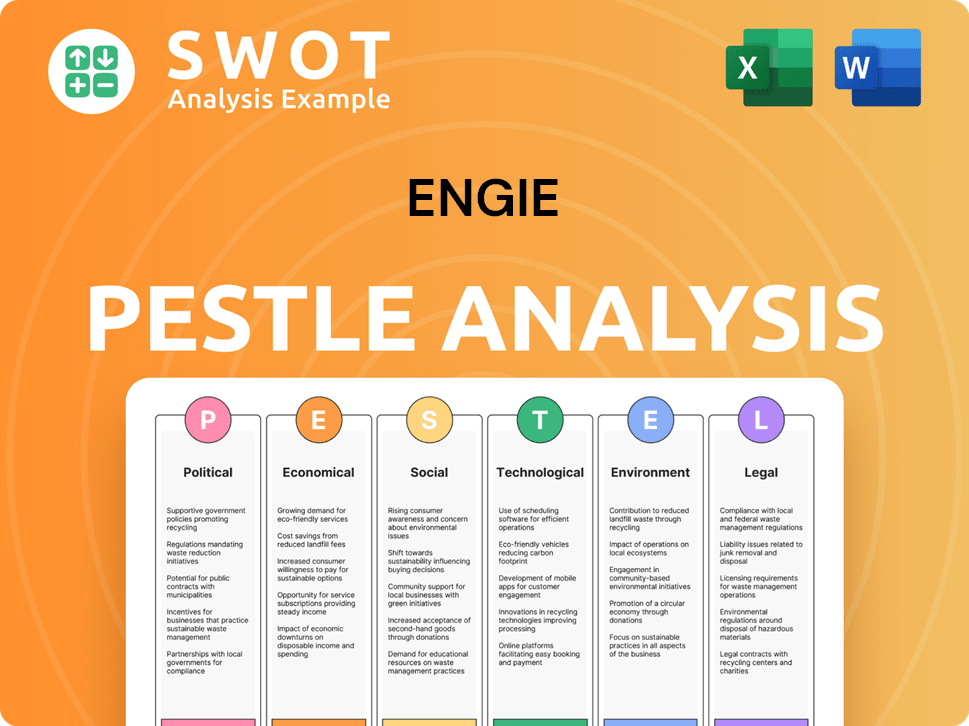
ENGIE PESTLE Analysis
- Covers All 6 PESTLE Categories
- No Research Needed – Save Hours of Work
- Built by Experts, Trusted by Consultants
- Instant Download, Ready to Use
- 100% Editable, Fully Customizable
What are the key Milestones in ENGIE history?
The ENGIE Group, with its roots in several predecessor companies, has achieved significant milestones throughout its history, shaping it into a major player in the global energy market. From its early ventures in gas infrastructure to its current focus on renewable energy and sustainable solutions, ENGIE has continually adapted to the evolving energy landscape. The company's journey reflects a commitment to innovation and a response to the challenges of the energy sector.
| Year | Milestone |
|---|---|
| 1850s | Founding of various predecessor companies focusing on gas and electricity distribution. |
| 1999 | Creation of GDF Suez through the merger of Gaz de France and Suez. |
| 2008 | GDF Suez becomes a global energy company, expanding its international presence and diversifying its portfolio. |
| 2015 | GDF Suez is rebranded as ENGIE, reflecting a strategic shift towards renewable energy and energy services. |
| 2020 | ENGIE accelerates its transition to renewable energy, aiming to increase its renewable energy capacity significantly. |
| 2023 | ENGIE aims for over 80% of its electricity generation capacity to be low-carbon, demonstrating a strong commitment to decarbonization. |
Throughout its history, ENGIE has been at the forefront of innovation in the energy sector. The company has been an early adopter of smart energy solutions and digital platforms for energy management, enhancing efficiency and customer services. Furthermore, ENGIE has made substantial investments in green hydrogen and biomethane, showcasing its commitment to future-proof technologies and sustainable energy sources.

Early Gas Infrastructure Development
Pioneering the development of gas infrastructure was a key innovation, crucial for urban and industrial growth during the early years of the company's predecessors.
Renewable Energy Investments
Significant investments in wind, solar, and hydro power projects positioned ENGIE as a leader in renewable energy, contributing to the reduction of carbon emissions.
Smart Energy Solutions
Development of smart energy solutions and digital platforms for energy management has enhanced efficiency and customer service.
Green Hydrogen and Biomethane
Investing in green hydrogen and biomethane demonstrates a commitment to future-proof technologies and sustainable energy sources.
Energy Efficiency Solutions
Focusing on energy efficiency solutions for clients helps in reducing energy consumption and promoting sustainability.
Digitalization of Energy Services
Implementing digital tools to optimize energy management and enhance customer experience is a key aspect of their innovative approach.
The ENGIE company has faced numerous challenges, including fluctuating energy prices and geopolitical instability. The push for decarbonization has presented both challenges and opportunities, requiring strategic shifts in investments and business models. The Mission, Vision & Core Values of ENGIE reflects its commitment to overcoming these obstacles.
Fluctuating Energy Prices
Navigating volatile energy markets has consistently been a challenge, requiring adaptive strategies to maintain profitability.
Geopolitical Instability
Geopolitical events have impacted supply chains and energy markets, necessitating flexible and resilient operational strategies.
Stringent Environmental Regulations
Meeting increasingly strict environmental regulations requires significant investments in cleaner energy technologies and operational adjustments.
Chernobyl Disaster
The Chernobyl disaster highlighted the need for robust nuclear safety protocols, influencing energy policy and impacting companies with nuclear assets.
Decarbonization Push
The global push for decarbonization has presented both challenges and opportunities, requiring massive investments in renewable technologies and a phased reduction in fossil fuel reliance.
Transitioning from Fossil Fuels
Phasing out reliance on fossil fuels while ensuring energy security poses a significant challenge, requiring strategic divestments and investments in alternatives.
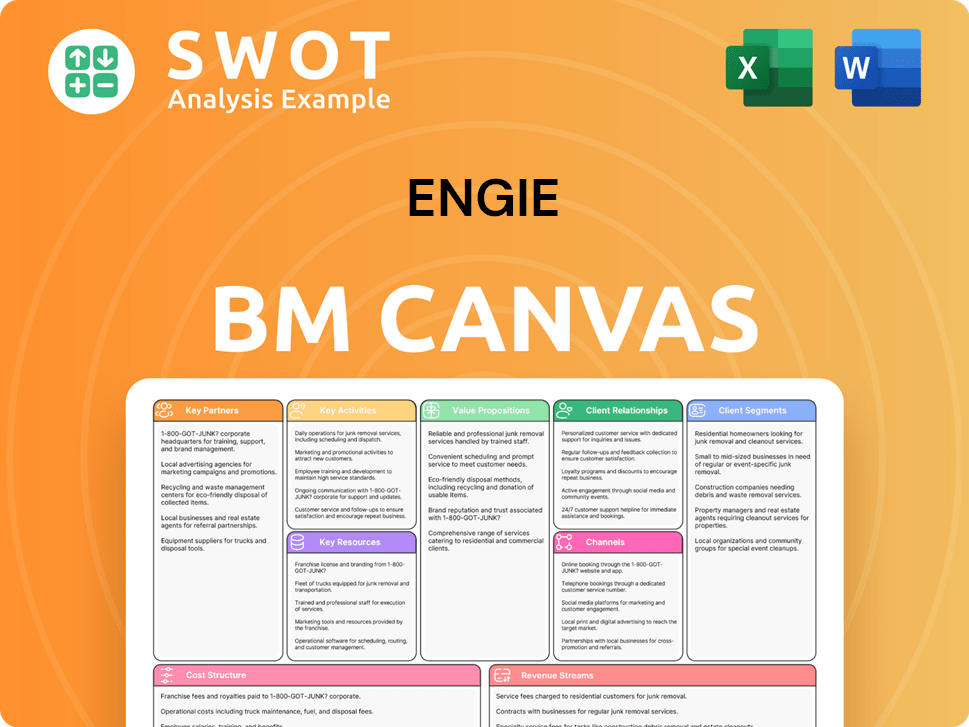
ENGIE Business Model Canvas
- Complete 9-Block Business Model Canvas
- Effortlessly Communicate Your Business Strategy
- Investor-Ready BMC Format
- 100% Editable and Customizable
- Clear and Structured Layout
What is the Timeline of Key Events for ENGIE?
The ENGIE history is marked by strategic shifts and significant milestones, evolving from its origins in infrastructure to a leading role in the energy transition. The company's journey began with the founding of Compagnie Universelle du Canal Maritime de Suez in 1858. Later, the creation of Gaz de France in 1946 and the merger of Suez Lyonnaise des Eaux in 1997 set the stage for a series of consolidations. The merger of Gaz de France and Suez S.A. in 2008 formed GDF SUEZ, which rebranded to ENGIE in 2015. Since 2016, the company has strategically focused on low-carbon energy and digital solutions, setting ambitious renewable energy targets and exiting coal activities by 2020.
| Year | Key Event |
|---|---|
| 1858 | Founding of Compagnie Universelle du Canal Maritime de Suez. |
| 1946 | Creation of Gaz de France. |
| 1997 | Suez Lyonnaise des Eaux (later Suez S.A.) is formed. |
| 2008 | Merger of Gaz de France and Suez S.A. to form GDF SUEZ. |
| 2015 | GDF SUEZ rebrands to ENGIE. |
| 2016 | ENGIE announces a strategic shift towards low-carbon energy and digital solutions. |
| 2020 | ENGIE sets ambitious targets for renewable energy development and exits coal activities. |
| 2023 | ENGIE aims for over 80% of its electricity generation capacity to be low-carbon. |
| 2024 | ENGIE continues to expand its renewable energy portfolio globally. |
Renewable Energy Expansion
ENGIE plans significant investments in renewable energy, aiming to add approximately 4 GW of renewable energy capacity per year. The company is focusing on expanding its global renewable energy portfolio. This expansion is a key part of ENGIE's strategy to lead the energy transition and reduce carbon emissions. In 2023, ENGIE targeted over 80% of its electricity generation capacity to be low-carbon.
Green Hydrogen and Energy Solutions
ENGIE is actively developing green hydrogen solutions as part of its commitment to sustainable energy. It is also expanding its energy efficiency services for businesses and cities. These initiatives are designed to help clients reduce their carbon footprint and improve energy management. The company is investing between €11 billion and €12 billion in renewables and energy solutions from 2023 to 2025.
Industry Trends and Market Impact
The energy sector is undergoing a significant transformation, driven by increasing demand for sustainable energy. Decentralization of energy production and digitalization of energy management are also key trends. These trends are expected to significantly impact ENGIE's future, with the company well-positioned to benefit from the growth in the renewable energy sector.
Strategic Vision and Leadership
ENGIE's leadership consistently emphasizes the company's commitment to leading the transition to a carbon-neutral world. This vision aligns with its evolving focus on sustainable energy solutions. The company's strategic initiatives and investments reflect its dedication to a low-carbon future. ENGIE's evolution from infrastructure projects to a focus on sustainable energy solutions underscores its long-term vision.
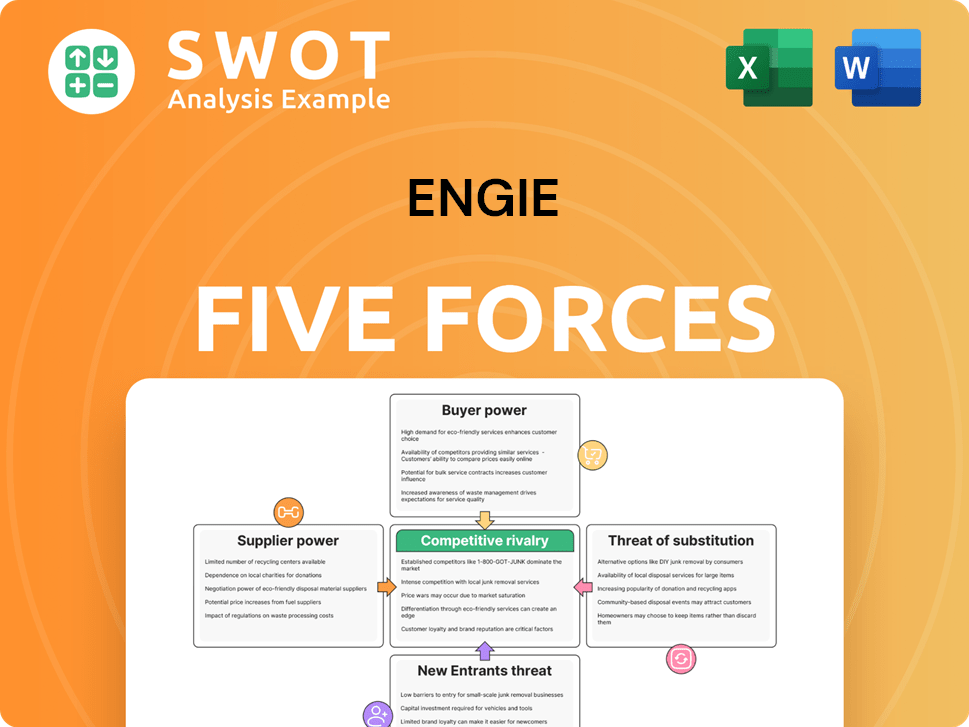
ENGIE Porter's Five Forces Analysis
- Covers All 5 Competitive Forces in Detail
- Structured for Consultants, Students, and Founders
- 100% Editable in Microsoft Word & Excel
- Instant Digital Download – Use Immediately
- Compatible with Mac & PC – Fully Unlocked
Related Blogs

- What is Competitive Landscape of ENGIE Company?
- What is Growth Strategy and Future Prospects of ENGIE Company?
- How Does ENGIE Company Work?
- What is Sales and Marketing Strategy of ENGIE Company?
- What is Brief History of ENGIE Company?
- Who Owns ENGIE Company?
- What is Customer Demographics and Target Market of ENGIE Company?
Disclaimer
All information, articles, and product details provided on this website are for general informational and educational purposes only. We do not claim any ownership over, nor do we intend to infringe upon, any trademarks, copyrights, logos, brand names, or other intellectual property mentioned or depicted on this site. Such intellectual property remains the property of its respective owners, and any references here are made solely for identification or informational purposes, without implying any affiliation, endorsement, or partnership.
We make no representations or warranties, express or implied, regarding the accuracy, completeness, or suitability of any content or products presented. Nothing on this website should be construed as legal, tax, investment, financial, medical, or other professional advice. In addition, no part of this site—including articles or product references—constitutes a solicitation, recommendation, endorsement, advertisement, or offer to buy or sell any securities, franchises, or other financial instruments, particularly in jurisdictions where such activity would be unlawful.
All content is of a general nature and may not address the specific circumstances of any individual or entity. It is not a substitute for professional advice or services. Any actions you take based on the information provided here are strictly at your own risk. You accept full responsibility for any decisions or outcomes arising from your use of this website and agree to release us from any liability in connection with your use of, or reliance upon, the content or products found herein.