

DCC Bundle

How did a Dublin-based startup become a global powerhouse?
Embark on a journey through the DCC SWOT Analysis and discover the remarkable transformation of DCC Company, a multinational sales, marketing, and support services group. From its inception in 1976 as F.J. McMahon Limited in Dublin, Ireland, DCC has consistently redefined its strategic direction, expanding into diverse sectors and achieving significant global presence. Explore the key milestones and pivotal decisions that have shaped DCC's evolution into a FTSE 100 company.

Understanding the brief history of DCC Company is crucial for grasping its current market position and future potential. The company's early years laid the groundwork for its impressive growth, marked by strategic diversification and a keen ability to adapt to changing market dynamics. This article will uncover the key factors behind DCC's success and provide insights into its ongoing journey as a leading international group. While not directly involved in the cryptocurrency space like Digital Currency Group, understanding DCC's history offers valuable lessons in strategic business development.
What is the DCC Founding Story?
The story of the DCC Company began in 1976. Initially known as F.J. McMahon Limited, the company was founded by Jim Flavin in Dublin, Ireland. The establishment of the company marked the beginning of a journey focused on providing essential sales, marketing, and support services.
Flavin, leveraging his financial background, saw an opportunity to improve distribution and support across various sectors. This vision led to the creation of a business model designed to bridge the gap between manufacturers and end-users. The early years of the DCC Company were defined by a practical approach to business, emphasizing strong relationships and efficient service.
The transition from F.J. McMahon Limited to DCC Company signified a strategic move towards a more adaptable corporate identity. Initial funding likely came from a mix of personal investment and early-stage capital. The economic environment of Ireland at the time, with its growing industrial base, offered a favorable setting for a company focused on enhancing supply chain efficiency and market reach. Overcoming challenges like securing initial contracts and building a reliable operational framework was crucial during the company's early years.

Key Milestones
The DCC Company's early years were marked by strategic growth and adaptation.
- 1976: Foundation of F.J. McMahon Limited by Jim Flavin in Dublin, Ireland.
- Early Focus: Providing sales, marketing, and support services.
- Strategic Shift: Transition to DCC Company to reflect a broader corporate identity.
- Economic Context: Leveraging Ireland's developing industrial base for growth.
The DCC Company's evolution reflects a strategic adaptation to market needs and opportunities. The company's ability to navigate economic fluctuations and regulatory changes has been key to its sustained growth. For more insights into the company's structure, you can explore Owners & Shareholders of DCC.
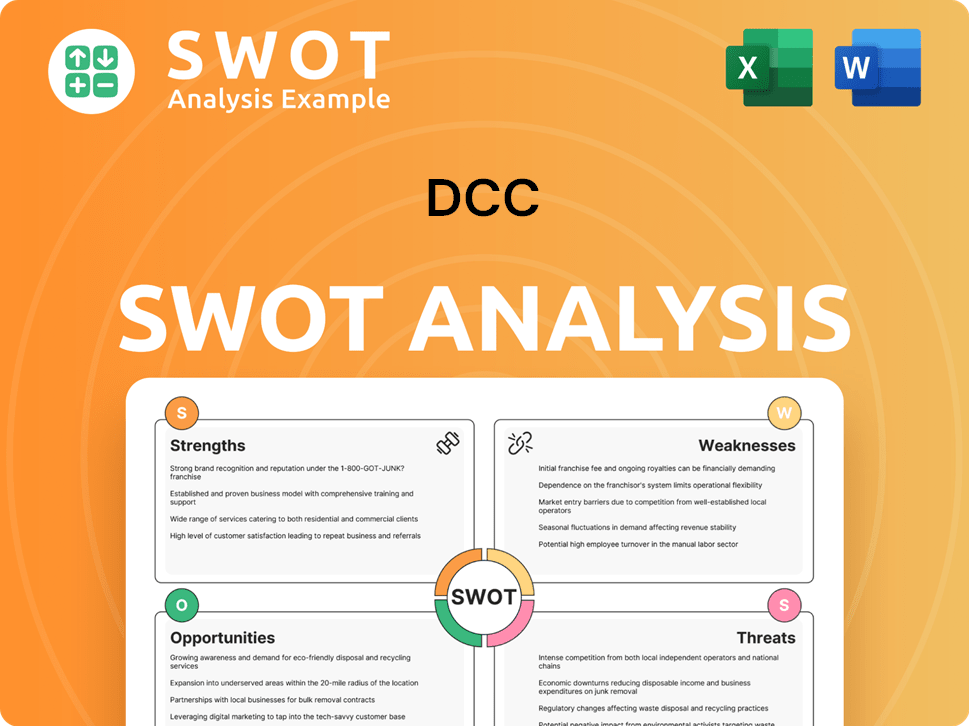
DCC SWOT Analysis
- Complete SWOT Breakdown
- Fully Customizable
- Editable in Excel & Word
- Professional Formatting
- Investor-Ready Format
What Drove the Early Growth of DCC?
The early growth of the DCC Company, a pivotal period in its brief history, was characterized by strategic diversification and geographical expansion. Moving beyond its initial Irish base, the company broadened its service offerings and entered new markets. This expansion laid the foundation for its multi-divisional structure. Key developments during this time included the growth of its energy distribution services, which became the bedrock of DCC Energy, and initial ventures into technology, evolving into DCC Technology.
 Strategic Diversification
DCC's approach to growth involved a blend of organic expansion and strategic acquisitions. Early acquisitions were crucial for consolidating its market position and accessing new customer bases and product lines. For example, acquiring fuel distribution businesses strengthened its presence in the energy sector, mirroring moves in IT distribution that helped establish its footprint in technology. These strategic moves were supported by a disciplined approach to capital allocation, ensuring investments contributed to long-term value creation.
Operational Infrastructure
Throughout its early growth, DCC focused on building a robust operational infrastructure and a skilled management team. This period saw the establishment of regional offices and distribution centers, boosting its logistical capabilities and market reach. The company's ability to adapt to changing market conditions and its consistent pursuit of new opportunities were pivotal in shaping its trajectory during these formative years. For more insights, explore the Growth Strategy of DCC.
Market Expansion
By the end of the 20th century, DCC had transformed from a local Irish entity into a significant international player. This set the stage for its subsequent growth into a global sales, marketing, and support services group. The company's early years were marked by strategic decisions that propelled its expansion. These early moves set the stage for the company's future, establishing it as a key player in various sectors.
Financial Performance
While specific financial data from the earliest years is limited, DCC's strategy of disciplined capital allocation and strategic acquisitions laid the groundwork for its future financial performance. The company's focus on building a robust operational infrastructure and a skilled management team contributed to its ability to adapt to changing market conditions. This early focus on financial prudence and strategic investment was key to its long-term success.
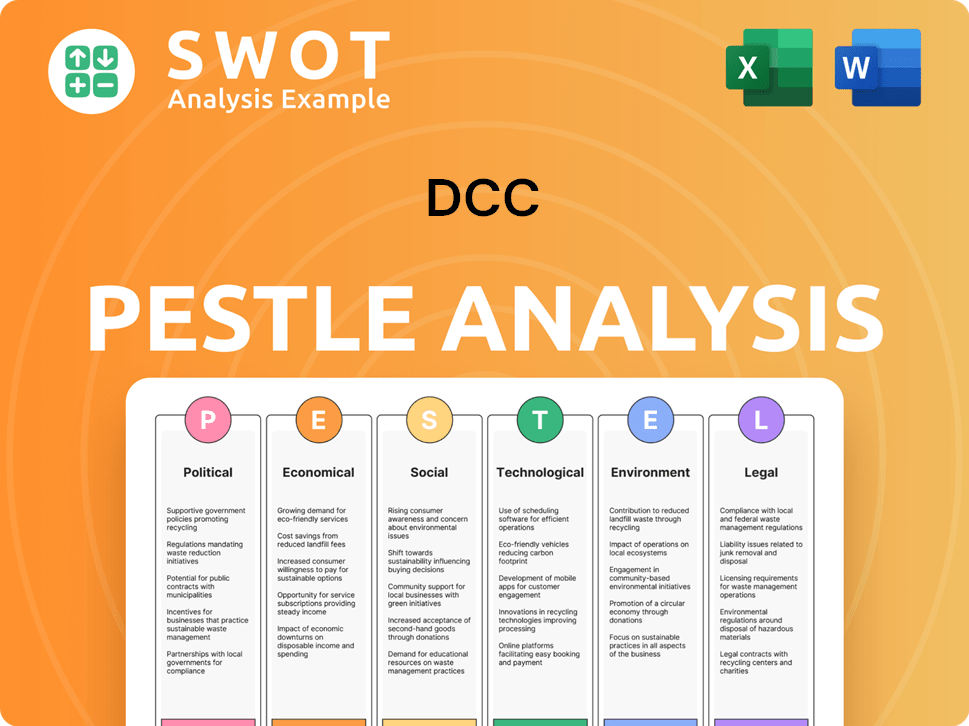
DCC PESTLE Analysis
- Covers All 6 PESTLE Categories
- No Research Needed – Save Hours of Work
- Built by Experts, Trusted by Consultants
- Instant Download, Ready to Use
- 100% Editable, Fully Customizable
What are the key Milestones in DCC history?
The DCC Company's journey, from its inception, has been marked by significant milestones that have shaped its trajectory and solidified its position in diverse sectors. The company's strategic moves and adaptability have been key to its sustained growth and resilience within the dynamic market landscapes it operates in. The DCC Company's history is a testament to its ability to navigate complex challenges and capitalize on emerging opportunities.
| Year | Milestone |
|---|---|
| Early Years | Foundation of the company, marking the beginning of its operations and strategic vision. |
| Strategic Expansion | Expansion into new markets and sectors, diversifying its portfolio and increasing its market presence. |
| Technological Integration | Implementation of advanced technologies to enhance operational efficiency and customer service across all divisions. |
The DCC Company has consistently embraced innovation across its various divisions, particularly in energy, healthcare, and technology. These innovations have enabled the company to adapt to changing market demands and improve its service offerings.

Energy Sector Optimization
Continuous optimization of distribution networks, adapting to evolving energy demands and the transition towards cleaner fuels. This includes investments in technologies that enhance efficiency and customer service.
Healthcare Expansion
Strategic acquisitions of pharmaceutical and medical device distribution businesses. This has allowed DCC to expand its reach and navigate the complex regulatory environment of the healthcare supply chain.
Technology Advancements
Consistent updating of its IT product portfolio to include cutting-edge hardware, software, and services. This has enabled the company to stay ahead of technological shifts.
Digital Platforms
Development and implementation of digital platforms for order management and other customer service enhancements. These platforms improve efficiency and customer satisfaction.
Remote Monitoring
Use of advanced telemetry for remote tank monitoring in the energy sector. This technology allows for better management and efficiency in fuel distribution.
Throughout its history, the DCC Company has faced numerous challenges, including economic downturns, volatile energy prices, and supply chain disruptions. The company's ability to adapt and implement strategic pivots has been crucial to its sustained success.
Economic Downturns
Navigating through periods of economic instability, such as the 2008 financial crisis, which led to a focus on cost control and operational efficiency. These measures helped to maintain financial resilience.
Supply Chain Disruptions
Addressing supply chain disruptions, such as those caused by the COVID-19 pandemic, through agile logistics and diversified sourcing. This ensured the continuity of operations.
Market Competition
Intense competition across all sectors, requiring continuous innovation and strategic adjustments to maintain market share. The company's adaptability is key to its survival.
Acquisition Integration
Integrating numerous acquisitions, ensuring cultural alignment and operational synergy to maximize the benefits of each acquisition. This is critical for long-term success.
Geographic Expansion
Expanding into new geographies, such as North America and continental Europe, to diversify revenue streams and reduce reliance on any single market. This strategy enhances overall stability.
Risk Management
Prioritizing risk management and operational excellence to mitigate potential challenges and ensure consistent financial performance. This approach is essential for long-term sustainability.
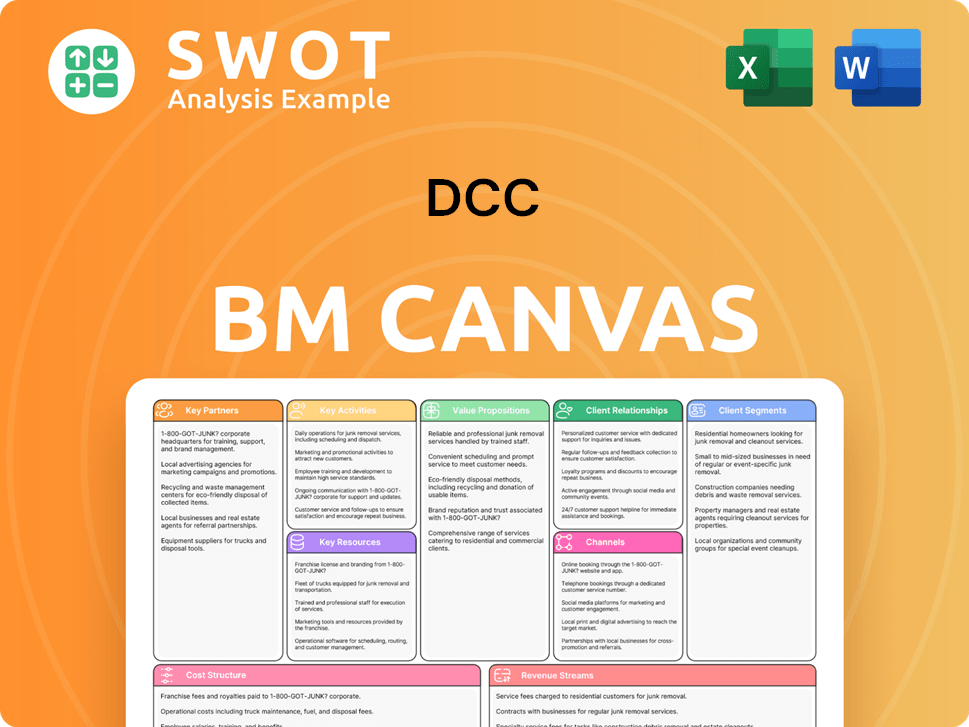
DCC Business Model Canvas
- Complete 9-Block Business Model Canvas
- Effortlessly Communicate Your Business Strategy
- Investor-Ready BMC Format
- 100% Editable and Customizable
- Clear and Structured Layout
What is the Timeline of Key Events for DCC?
The DCC Company, a leading international sales, marketing, and support services group, has a history marked by consistent growth and strategic diversification. Initially founded as F.J. McMahon Limited in Dublin, Ireland, the company has expanded significantly since the 1970s, evolving into a FTSE 100 company with a global presence across various sectors.
| Year | Key Event |
|---|---|
| 1976 | Founded as F.J. McMahon Limited in Dublin, Ireland. |
| 1980s | Expansion into energy distribution and initial diversification into other sectors. |
| 1994 | Listed on the Irish Stock Exchange and London Stock Exchange. |
| 2000s | Significant international expansion, particularly in Europe, through strategic acquisitions in energy, healthcare, and technology. |
| 2006 | Reached £5 billion in revenue. |
| 2010s | Continued strong acquisitive growth, further consolidating market positions in its key divisions. |
| 2015 | Achieved FTSE 100 status. |
| 2020 | Navigated the challenges of the global pandemic, demonstrating supply chain resilience. |
| 2023 | Continued strategic acquisitions, strengthening its presence in renewable energy solutions and healthcare services. |
| 2024 | Reported adjusted operating profit of £600.3 million for the year ended March 31, 2024. |
Energy Transition Focus
The company is expanding its presence in renewable energy solutions and lower-carbon alternatives. This aligns with global decarbonization trends and supports sustainable growth. Strategic acquisitions in this sector are expected to continue.
Healthcare Services Growth
DCC Healthcare aims to capitalize on demographic shifts and advancements in medical technology. The company is likely to pursue strategic acquisitions to strengthen its position in this sector. This focus aligns with the increasing demand for healthcare services.
Technology Sector Adaptation
DCC Technology will continue to adapt to the rapidly evolving IT landscape, particularly in areas like cybersecurity and cloud services. The company's strategy involves staying ahead of technological advancements. This includes responding to the changing needs of the IT market.
Strategic Acquisitions and Growth
The company plans to continue its disciplined acquisition strategy, targeting businesses that complement its existing operations and offer opportunities for future growth. Analyst predictions suggest continued steady growth. Leadership emphasizes delivering long-term shareholder value.
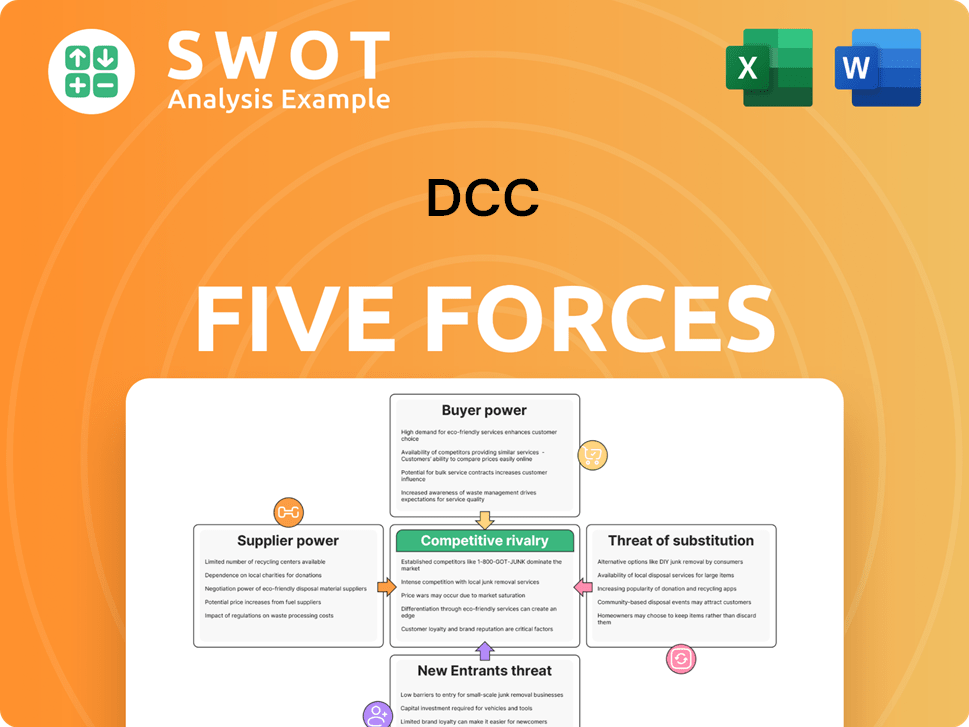
DCC Porter's Five Forces Analysis
- Covers All 5 Competitive Forces in Detail
- Structured for Consultants, Students, and Founders
- 100% Editable in Microsoft Word & Excel
- Instant Digital Download – Use Immediately
- Compatible with Mac & PC – Fully Unlocked
Related Blogs

- What is Competitive Landscape of DCC Company?
- What is Growth Strategy and Future Prospects of DCC Company?
- How Does DCC Company Work?
- What is Sales and Marketing Strategy of DCC Company?
- What is Brief History of DCC Company?
- Who Owns DCC Company?
- What is Customer Demographics and Target Market of DCC Company?
Disclaimer
All information, articles, and product details provided on this website are for general informational and educational purposes only. We do not claim any ownership over, nor do we intend to infringe upon, any trademarks, copyrights, logos, brand names, or other intellectual property mentioned or depicted on this site. Such intellectual property remains the property of its respective owners, and any references here are made solely for identification or informational purposes, without implying any affiliation, endorsement, or partnership.
We make no representations or warranties, express or implied, regarding the accuracy, completeness, or suitability of any content or products presented. Nothing on this website should be construed as legal, tax, investment, financial, medical, or other professional advice. In addition, no part of this site—including articles or product references—constitutes a solicitation, recommendation, endorsement, advertisement, or offer to buy or sell any securities, franchises, or other financial instruments, particularly in jurisdictions where such activity would be unlawful.
All content is of a general nature and may not address the specific circumstances of any individual or entity. It is not a substitute for professional advice or services. Any actions you take based on the information provided here are strictly at your own risk. You accept full responsibility for any decisions or outcomes arising from your use of this website and agree to release us from any liability in connection with your use of, or reliance upon, the content or products found herein.