

Cardinal Bundle

How has Cardinal Company shaped the Canadian energy landscape?
Cardinal Energy Ltd. has become a notable name in the Canadian oil and natural gas sector, but how did it all begin? From its inception in 2010, this company has focused on sustainable practices and strategic growth. Discover the Cardinal SWOT Analysis to see the company's standing in the market.

Understanding the Cardinal Company history is crucial for investors and industry watchers alike. The Company timeline reveals a journey of strategic decisions and operational excellence, from its early days acquiring assets to its current focus on thermal projects. Exploring the business history of Cardinal provides insights into its adaptability and its impact on the energy market, including its ability to navigate challenges and seize opportunities for growth. Examining the corporate history offers a glimpse into the leadership and vision that have propelled Cardinal Energy to its current position.
What is the Cardinal Founding Story?
The Competitors Landscape of Cardinal is an interesting one. Cardinal Energy Ltd. has a rich history, beginning with its incorporation and evolving through strategic acquisitions and operational adjustments. Understanding the company's origins provides context for its current position in the energy sector.
Cardinal Energy Ltd. was initially established on December 21, 2010, under the Business Corporations Act (Alberta) as 1577088 Alberta Ltd. The company officially adopted the name 'Cardinal Energy Ltd.' on May 25, 2012. This marked the formal beginning of a company focused on the acquisition, exploration, and production of crude oil and natural gas resources.
The initial focus was on Western Canada, particularly Alberta and Saskatchewan, where the company aimed to capitalize on low-decline oil reserves. The company's early business model emphasized cost-efficient production and reserve growth, with a long-term goal of creating shareholder value through sustainable operations. While specific details about the individual founders and initial funding are not widely publicized, the company has since utilized significant capital raises, including a $45 million bought deal offering of senior subordinated unsecured debentures in March 2025 and a $50 million offering in December 2024.

Cardinal Company's Founding Story
Cardinal Energy Ltd. was incorporated in late 2010, with a name change in 2012. The company focused on oil and gas production in Western Canada.
- Incorporated on December 21, 2010, as 1577088 Alberta Ltd.
- Changed name to Cardinal Energy Ltd. on May 25, 2012.
- Focused on crude oil and natural gas in Alberta and Saskatchewan.
- Emphasized cost-efficient production and reserve growth.
- Relied on debt financing, with offerings in 2024 and 2025.
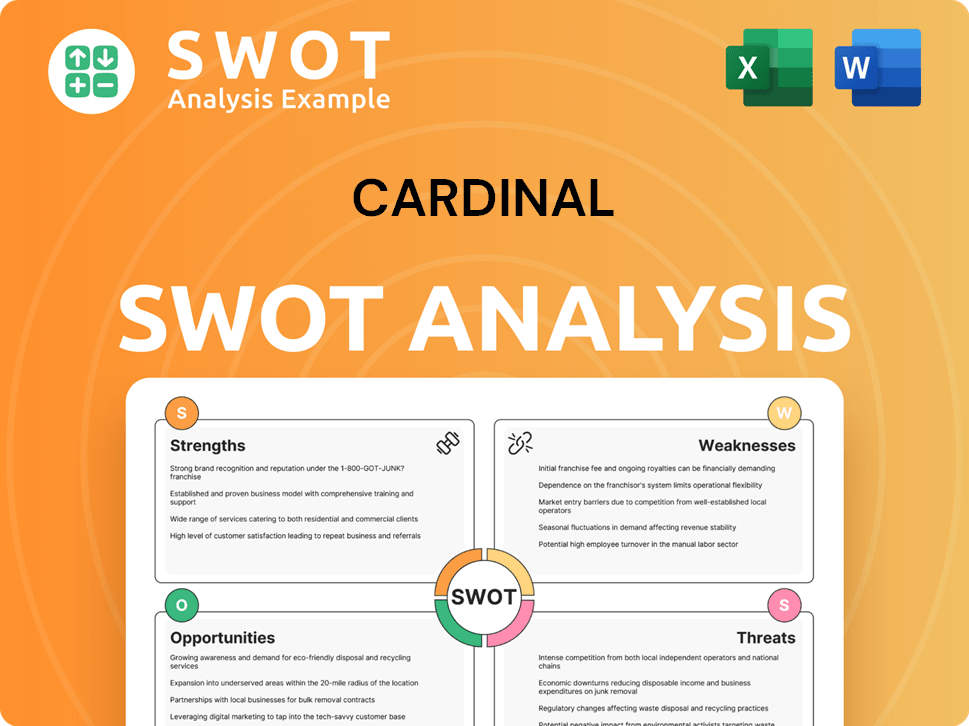
Cardinal SWOT Analysis
- Complete SWOT Breakdown
- Fully Customizable
- Editable in Excel & Word
- Professional Formatting
- Investor-Ready Format
What Drove the Early Growth of Cardinal?
The early growth and expansion of Cardinal Energy Ltd. has been marked by strategic acquisitions and operational optimization since its founding in 2010. This Cardinal Company history reflects a focus on acquiring and enhancing low-decline oil production assets. The company's journey includes significant investments and financial strategies aimed at sustained growth.
 Acquisition and Asset Optimization
Cardinal's early strategy centered on acquiring low-decline oil production assets. By 2017, the company had acquired properties like Midale, which demonstrated significant production increases. In Q1 2025, Midale's light oil production reached over 3,600 bbl/d, the highest since the acquisition, thanks to water-alternating-gas (WAG) injection.
Operational Investments and Cost Efficiency
The company has consistently optimized its conventional assets. In 2024, Cardinal invested $103.3 million in conventional capital expenditures, drilling 21 (20.1 net) wells. This focus on efficiency led to a 7% decrease in net operating expenses to $24.33/boe in Q1 2025 compared to the same period in 2024.
Financial Strategies and Capital Raises
Cardinal has actively secured financing to support its growth. In Q1 2025, the company issued $105 million in debentures, significantly reducing bank debt. This financial discipline allowed Cardinal to maintain a 67% payout ratio in Q1 2025, supporting dividend sustainability.
Strategic Shift and Market Reception
A key strategic shift involves thermal development, highlighted by the Reford thermal project, nearing completion in 2025. This project is expected to boost production and improve the company's environmental footprint. Market reception has been positive, with RBC Capital Markets upgrading the company in April 2025, citing the Reford project as a catalyst.
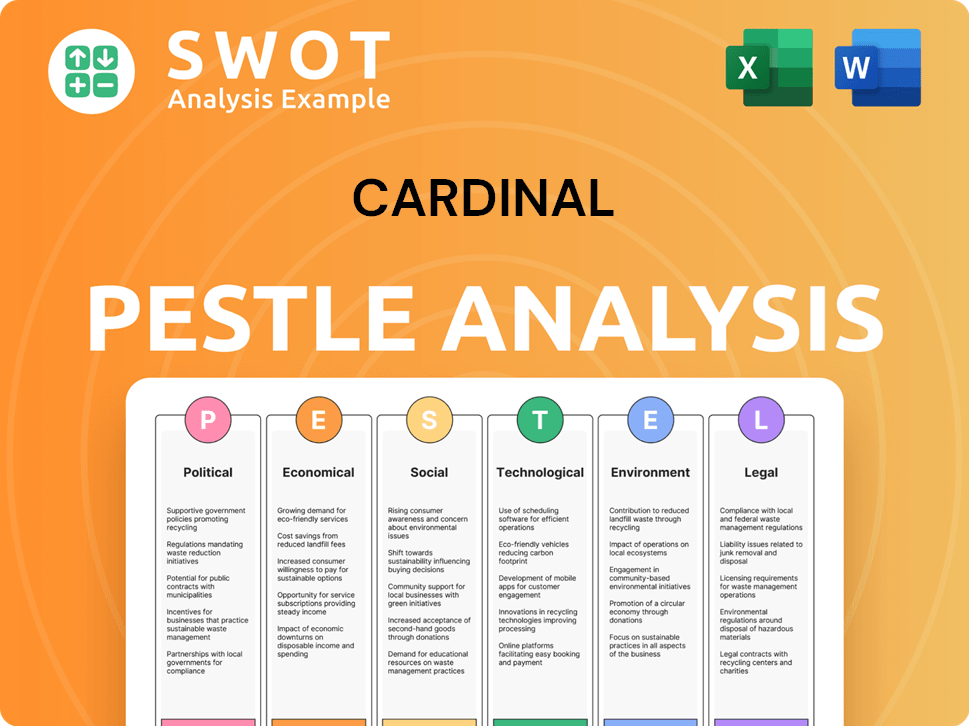
Cardinal PESTLE Analysis
- Covers All 6 PESTLE Categories
- No Research Needed – Save Hours of Work
- Built by Experts, Trusted by Consultants
- Instant Download, Ready to Use
- 100% Editable, Fully Customizable
What are the key Milestones in Cardinal history?
The Cardinal Company history is marked by significant achievements, particularly in sustainable oil production and shareholder returns. The company's strategic moves and operational successes have shaped its trajectory in the energy sector.
| Year | Milestone |
|---|---|
| 2025 (Q1) | The Midale CCS-EOR project sequestered approximately 62,000 tonnes of CO2, bringing the total to 5.9 million tonnes since inception. |
| 2025 (Q1) | The Reford thermal project in Southwest Saskatchewan was over 80% complete and on track to begin production in 2026. |
| 2025 (Q1) | Net debt was slashed by 90% to $8.3 million, with total net debt at $191.4 million. |
| 2024 | Inclusion in the 2024 TSX30 list, recognizing top-performing companies on the TSX over a three-year period. |
A key innovation involves implementing water flooding and CO2 sequestration to extend the life of mature fields. The Midale CCS-EOR project is a prime example, reducing the oil production decline rate to 3% and potentially benefiting from carbon credit incentives.

Water Flooding Techniques
Water flooding techniques are used to enhance oil recovery, extending the productive life of existing oil fields. This method helps to maintain pressure within the reservoir, pushing more oil towards the production wells.
CO2 Sequestration
CO2 sequestration initiatives, such as the Midale CCS-EOR project, involve capturing and storing carbon dioxide. This process reduces greenhouse gas emissions and can enhance oil recovery.
Midale CCS-EOR Project
The Midale CCS-EOR project is a significant innovation, sequestering substantial amounts of CO2. This project not only supports environmental sustainability but also extends the productive life of the oil field.
Reford Thermal Project
The Reford thermal project, over 80% complete as of Q1 2025, utilizes Steam-Assisted Gravity Drainage (SAGD) technology. This project is expected to contribute significantly to future production.
SAGD Technology
Steam-Assisted Gravity Drainage (SAGD) is a key technology used in the Reford thermal project. This method involves injecting steam into the reservoir to heat the bitumen, allowing it to flow to production wells.
The oil and gas industry's inherent volatility, including commodity price fluctuations, has presented challenges for Cardinal Company. The company has addressed these challenges by maintaining a strong balance sheet and employing risk management strategies.
Commodity Price Volatility
Fluctuations in commodity prices, particularly oil and natural gas, pose a significant challenge. These price swings can impact revenue and profitability, requiring careful financial planning.
Market Downturns
Economic downturns can negatively affect demand and prices in the oil and gas sector. Companies must adapt to changing market conditions to maintain financial stability.
Financial Discipline
Maintaining a resilient balance sheet is crucial for navigating market challenges. This involves managing debt levels and ensuring sufficient cash flow to withstand economic pressures.
Risk Management
Risk management strategies, such as hedging and using AECO collars, help to mitigate the impact of price volatility. These measures provide a degree of stability in uncertain market conditions.
Cardinal Business Model Canvas
- Complete 9-Block Business Model Canvas
- Effortlessly Communicate Your Business Strategy
- Investor-Ready BMC Format
- 100% Editable and Customizable
- Clear and Structured Layout

What is the Timeline of Key Events for Cardinal?
The Owners & Shareholders of Cardinal have witnessed a dynamic Cardinal Company history, marked by strategic shifts and significant project developments. From its incorporation in 2010 to the recent completion of key acquisitions and the launch of major projects, the company has consistently adapted to market changes, driving growth and enhancing shareholder value.
| Year | Key Event |
|---|---|
| December 21, 2010 | Incorporated as 1577088 Alberta Ltd. |
| May 25, 2012 | Name changed to 'Cardinal Energy Ltd.'. |
| June 28, 2012 | Amended Articles to enable issuance of stock dividends. |
| July 27, 2012 | Amended Articles to remove private company restrictions. |
| June 1, 2021 | Announced a strategic acquisition, a continuation of its strategy of acquiring and developing low-decline oil production. |
| January 15, 2025 | Announced 2025 budget, focusing on completing the Reford SAGD project with first steam expected in Q3 2025 and initial production in Q4 2025. |
| February 24, 2025 | Announced 2024 year-end reserves and formal recognition of the Reford thermal project, with drilling of initial SAGD well pairs more than halfway to completion. |
| March 4, 2025 | Closed a $45 million bought deal offering of senior subordinated unsecured debentures. |
| March 13, 2025 | Announced Fourth Quarter 2024 and Year-End Financial Results, with average production of 21,776 boe/d in 2024. |
| April 1, 2025 | Announced appointment of new officers. |
| May 8, 2025 | Announced First Quarter 2025 Operating and Financial Results, with Q1 2025 production of 22,005 boe/d and Reford thermal project over 80% complete. |
| May 9, 2025 | Announced results of director elections. |
| May 12, 2025 | Announced monthly dividend for May. |
Reford Project Completion
The Reford thermal project is a cornerstone of Cardinal Company's future strategy. Full production of approximately 6,000 bbl/d of heavy oil is expected by Q1 2026. This project will significantly enhance the company's production profile and long-term sustainability.
Strategic Expansion
The company plans to de-risk and prepare for a second SAGD project at Kelfield, Saskatchewan. Conventional development drilling will continue with additional select drilling planned for the second half of 2025. This expansion underscores the company's commitment to thermal development.
Financial Strategy
Cardinal aims to maintain a conservative balance sheet. The company's long-term goal is to grow through thermal development while managing its finances prudently. The focus is on driving down the payout ratio of its dividend versus adjusted funds flow.
Analyst Outlook
RBC Capital Markets raised its price target to C$7.50 in April 2025, citing the Reford project as a key catalyst. While earnings are forecast to decline over the next three years, revenue is expected to grow at 2.7% per year, indicating a positive trajectory for the company. This contributes to the Cardinal history.
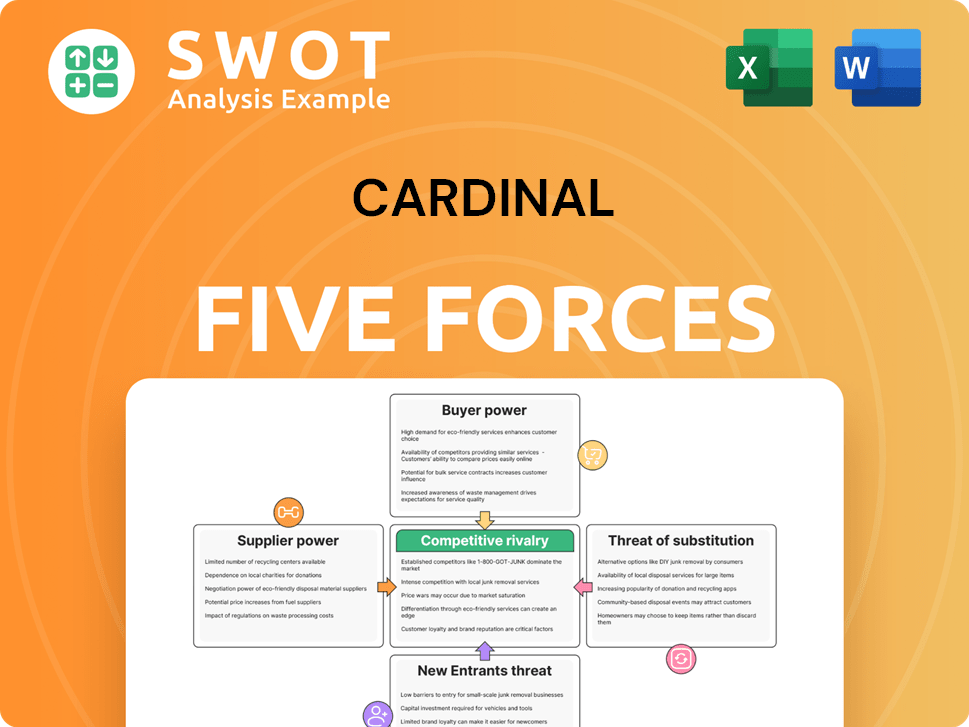
Cardinal Porter's Five Forces Analysis
- Covers All 5 Competitive Forces in Detail
- Structured for Consultants, Students, and Founders
- 100% Editable in Microsoft Word & Excel
- Instant Digital Download – Use Immediately
- Compatible with Mac & PC – Fully Unlocked
Related Blogs

- What is Competitive Landscape of Cardinal Company?
- What is Growth Strategy and Future Prospects of Cardinal Company?
- How Does Cardinal Company Work?
- What is Sales and Marketing Strategy of Cardinal Company?
- What is Brief History of Cardinal Company?
- Who Owns Cardinal Company?
- What is Customer Demographics and Target Market of Cardinal Company?
Disclaimer
All information, articles, and product details provided on this website are for general informational and educational purposes only. We do not claim any ownership over, nor do we intend to infringe upon, any trademarks, copyrights, logos, brand names, or other intellectual property mentioned or depicted on this site. Such intellectual property remains the property of its respective owners, and any references here are made solely for identification or informational purposes, without implying any affiliation, endorsement, or partnership.
We make no representations or warranties, express or implied, regarding the accuracy, completeness, or suitability of any content or products presented. Nothing on this website should be construed as legal, tax, investment, financial, medical, or other professional advice. In addition, no part of this site—including articles or product references—constitutes a solicitation, recommendation, endorsement, advertisement, or offer to buy or sell any securities, franchises, or other financial instruments, particularly in jurisdictions where such activity would be unlawful.
All content is of a general nature and may not address the specific circumstances of any individual or entity. It is not a substitute for professional advice or services. Any actions you take based on the information provided here are strictly at your own risk. You accept full responsibility for any decisions or outcomes arising from your use of this website and agree to release us from any liability in connection with your use of, or reliance upon, the content or products found herein.