

AIB Group Bundle

How has AIB Group shaped the financial landscape?
Delve into the captivating AIB Group SWOT Analysis to understand the trajectory of one of Ireland's most significant financial institutions. From its origins in 1825, AIB Group, formerly known as Allied Irish Banks, has navigated centuries of economic shifts, establishing itself as a cornerstone of Irish banking. This journey is a testament to its resilience and adaptability within the ever-evolving financial sector.

Tracing the brief history of AIB Group reveals a story of consistent growth and strategic evolution, mirroring the development of the Irish economy itself. Understanding the early years of Allied Irish Banks and its key milestones provides crucial insights into its current status and its pivotal role within the financial institutions of Ireland. The bank's ability to overcome challenges, including the 2008 financial crisis, underscores its enduring impact on the Irish and UK markets, making it a key player in the financial sector.
What is the AIB Group Founding Story?
The story of AIB Group, or Allied Irish Banks, begins in 1825. It started with the establishment of the Provincial Bank of Ireland in London. This bank was created to address the need for a more organized banking system in Ireland, which was lacking at the time.
The founders, a mix of Irish and British business people, saw an opportunity. They aimed to offer various banking services, like taking deposits and giving out loans. This was to support the growing agricultural and commercial sectors across Ireland. This early focus set the stage for AIB's future in Irish banking.
The initial plan involved opening branches throughout Ireland. This was different from the more centralized banking models of the time. This approach allowed the bank to connect with local communities and businesses. The funding came from shareholders, a common practice for banks back then. This laid the foundation for AIB's customer-focused service.

Key Highlights of AIB Group's Founding
The Provincial Bank of Ireland was founded in 1825 to improve banking services in Ireland.
- The bank aimed to support agriculture and commerce with services like loans and deposits.
- It used a decentralized approach, opening branches across Ireland.
- Shareholders provided the initial funding.
- This early structure set the stage for AIB Group's future.
The Competitors Landscape of AIB Group reveals that AIB has evolved significantly since its founding. AIB Group's history is a testament to its adaptability. The bank has grown to become a major player in Irish banking. It has navigated economic changes and maintained a focus on its customers.
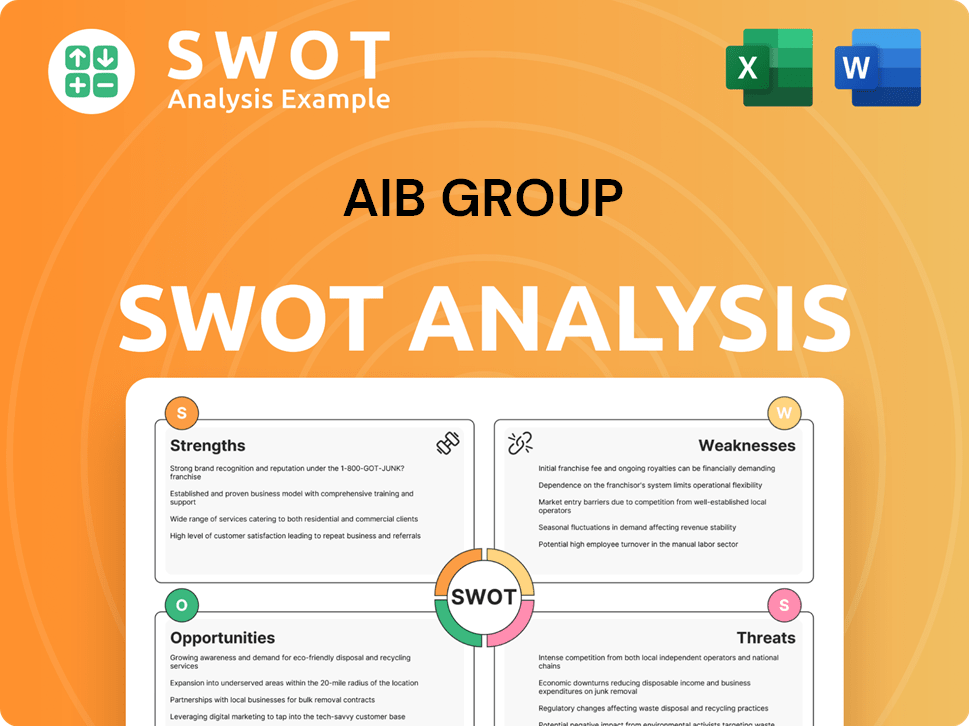
AIB Group SWOT Analysis
- Complete SWOT Breakdown
- Fully Customizable
- Editable in Excel & Word
- Professional Formatting
- Investor-Ready Format
What Drove the Early Growth of AIB Group?
The early growth of AIB Group, formerly known as Allied Irish Banks, involved strategic expansion and consolidation within the Irish banking sector. The roots of AIB can be traced back to several foundational institutions, including the Provincial Bank (1825), the Agricultural Bank (1834), and the Royal Bank of Ireland (1836). These entities, along with others, paved the way for the formation of a major financial player in Ireland.
 Key Mergers and Acquisitions
A pivotal moment in AIB's history was the 1966 merger that created Allied Irish Banks Limited. This involved the Provincial Bank of Ireland, the Royal Bank of Ireland, and the Munster & Leinster Bank. This consolidation created a stronger entity capable of navigating the changing financial landscape. Strategic acquisitions and partnerships further fueled AIB's growth, particularly in the UK and the US, as detailed in Growth Strategy of AIB Group.
Geographic Expansion
Following the 1966 merger, Allied Irish Banks expanded its operations significantly. This expansion included broadening its geographical footprint, with a focus on the UK and the United States. By the end of the 20th century, AIB had established a strong presence in the Irish market and initiated international ventures. In 2024, AIB continues to operate in these key markets.
Technological Advancements
During its early growth phase, AIB embraced technological advancements to improve efficiency. The introduction of computerized systems for processing transactions streamlined operations. These technological integrations allowed AIB to manage its growing customer base and handle increasing transaction volumes more effectively. The bank's adoption of technology was a key factor in its ability to scale its operations.
Product and Service Diversification
AIB broadened its range of services to include more sophisticated corporate banking and wealth management solutions. This diversification allowed AIB to cater to a wider array of clients and meet the evolving needs of the market. The expansion of product offerings was a strategic move to capture a larger share of the financial services market. As of 2024, AIB continues to offer a comprehensive suite of financial products.
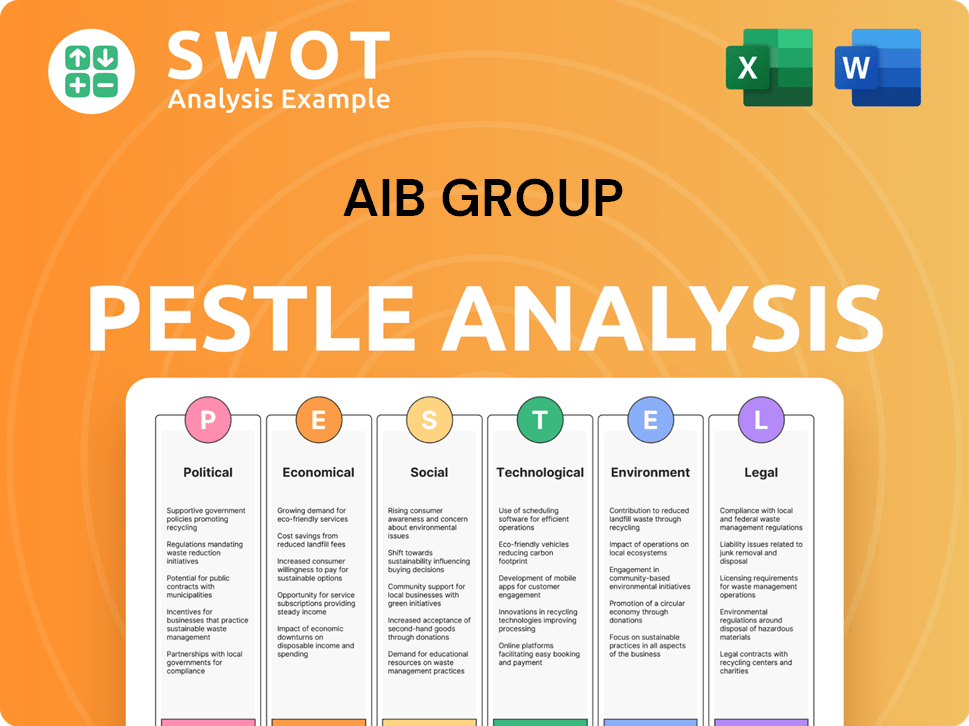
AIB Group PESTLE Analysis
- Covers All 6 PESTLE Categories
- No Research Needed – Save Hours of Work
- Built by Experts, Trusted by Consultants
- Instant Download, Ready to Use
- 100% Editable, Fully Customizable
What are the key Milestones in AIB Group history?
The AIB Group, formerly known as Allied Irish Banks, has a rich AIB history marked by significant milestones. These events have shaped the financial institution into what it is today, influencing its operations and strategic direction within the Irish banking sector and beyond. The journey of Allied Irish Banks reflects a commitment to growth, adaptation, and resilience in a constantly evolving financial landscape.
| Year | Milestone |
|---|---|
| 1966 | The strategic merger formed Allied Irish Banks, creating a stronger financial institution. |
| Late 20th Century | Early adoption of technology, including ATMs and online banking platforms, enhanced customer convenience. |
| 2008 | The global financial crisis significantly impacted the Irish banking sector, including AIB, necessitating substantial recapitalization. |
| 2017 | AIB completed its return to private ownership after the financial crisis. |
| 2024 | AIB continues to focus on sustainability and digital transformation. |
AIB Group has consistently embraced innovation to improve its services and operational efficiency. Early technological advancements, such as ATMs and online banking, set the stage for future developments.

Early Technology Adoption
AIB Group was an early adopter of technology, implementing ATMs and online banking platforms in the late 20th century. This significantly improved customer service and operational efficiency.
Digital Transformation
More recently, AIB Group has focused on digital transformation, investing in new technologies to enhance customer experience and streamline operations. This includes advancements in mobile banking and online services.
Sustainable Finance Initiatives
AIB Group is committed to sustainable finance, aiming to increase green lending and support the transition to a low-carbon economy. This involves providing financial products that promote environmental sustainability.
AIB Group has faced several challenges, including the 2008 financial crisis, which led to significant financial losses and required substantial government intervention. The AIB history includes navigating through periods of economic instability and adapting to regulatory changes.
2008 Financial Crisis
The 2008 financial crisis severely impacted the Irish banking sector, including AIB Group, leading to significant financial losses and the need for government recapitalization. This crisis necessitated major restructuring and asset disposals.
Restructuring and Reform
In response to the crisis, AIB Group undertook significant reforms, focusing on strengthening its balance sheet, improving risk management, and enhancing corporate governance. These measures aimed to restore financial stability and rebuild public trust.
Regulatory Changes
AIB Group has adapted to evolving regulatory landscapes, including changes in capital requirements and compliance standards. These changes have influenced the bank's operations and strategic decisions.
Market Competition
AIB Group faces competition from both domestic and international financial institutions. This competitive environment requires continuous innovation and customer-focused strategies.
Economic Fluctuations
The bank is subject to economic cycles and market volatility, which can impact its financial performance. Managing these risks requires strategic planning and adaptability.
Digital Disruption
The rise of fintech and digital banking presents both opportunities and challenges. AIB Group must continue to innovate and adapt to stay competitive in the digital age.
For a deeper dive into the strategies employed by AIB Group, consider exploring the Marketing Strategy of AIB Group.
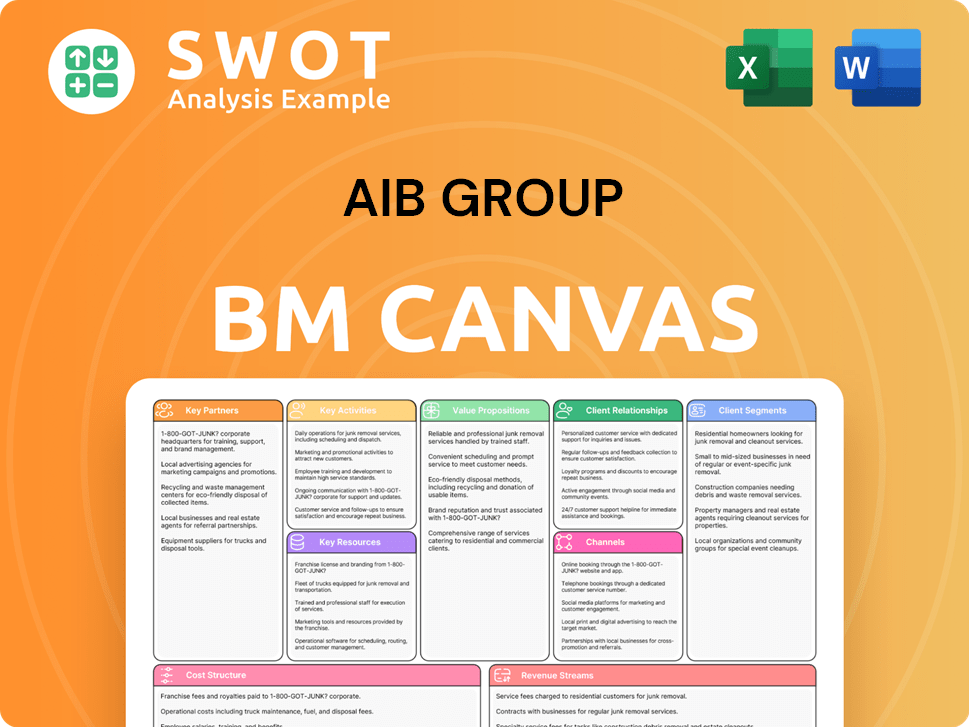
AIB Group Business Model Canvas
- Complete 9-Block Business Model Canvas
- Effortlessly Communicate Your Business Strategy
- Investor-Ready BMC Format
- 100% Editable and Customizable
- Clear and Structured Layout
What is the Timeline of Key Events for AIB Group?
The AIB Group, formerly known as Allied Irish Banks, has a rich history rooted in the evolution of Irish banking. Several key milestones have shaped the company into the financial institution it is today. From its origins in the 19th century to its recovery following the 2008 financial crisis, AIB has navigated significant challenges and opportunities, solidifying its position in the Irish banking sector. The company's journey reflects both its resilience and its adaptability to changing economic landscapes.
| Year | Key Event |
|---|---|
| 1825 | The Provincial Bank of Ireland was established, marking an early entry into Irish banking. |
| 1834 | The Agricultural Bank was founded, expanding the reach of financial services. |
| 1836 | The Royal Bank of Ireland was founded, further diversifying the Irish banking landscape. |
| 1864 | Munster Bank was established, strengthening the financial infrastructure. |
| 1966 | Allied Irish Banks Limited was formed through the merger of Provincial Bank of Ireland, Royal Bank of Ireland, and Munster & Leinster Bank. |
| 1980s | AIB adopted early ATM technology and developed computerized banking systems, increasing efficiency. |
| 2008 | The global financial crisis severely impacted AIB, leading to government recapitalization. |
| 2014 | AIB began divesting non-core assets as part of its restructuring plan, focusing on core operations. |
| 2017 | AIB successfully returned to the stock market with an Initial Public Offering (IPO). |
| 2020 | AIB acquired Goodbody Stockbrokers, expanding its wealth management capabilities. |
| 2021 | AIB acquired Ulster Bank's performing tracker mortgage book, consolidating its market position. |
| 2024 | AIB reported significant profit growth, with profit before tax increasing by 53% to €1.3 billion in 2023. |
Digital Transformation
AIB is prioritizing digital transformation to enhance its digital offerings and improve customer experience. This includes investments in online and mobile banking platforms, aiming to provide more convenient and efficient services. The bank's focus is on meeting the evolving needs of its customers through technology.
Sustainability Initiatives
AIB is committed to sustainability, with a strong emphasis on increasing green lending and supporting the transition to a low-carbon economy. This involves financing projects that promote environmental sustainability and reducing the bank's own carbon footprint. AIB's sustainability agenda is a key part of its future strategy.
Market Position and Innovation
Analyst predictions suggest that AIB will continue to leverage its strong domestic market position while exploring further digital innovation and sustainable finance opportunities. The bank's ability to adapt and innovate is crucial for maintaining its competitive edge. AIB is focused on responsible banking practices.
Leadership and Strategy
Leadership statements emphasize a commitment to responsible banking and contributing to the economic well-being of Ireland and the UK. This forward-looking strategy aligns with the founding vision of a robust and reliable financial institution. AIB aims to meet the challenges of the 21st century.
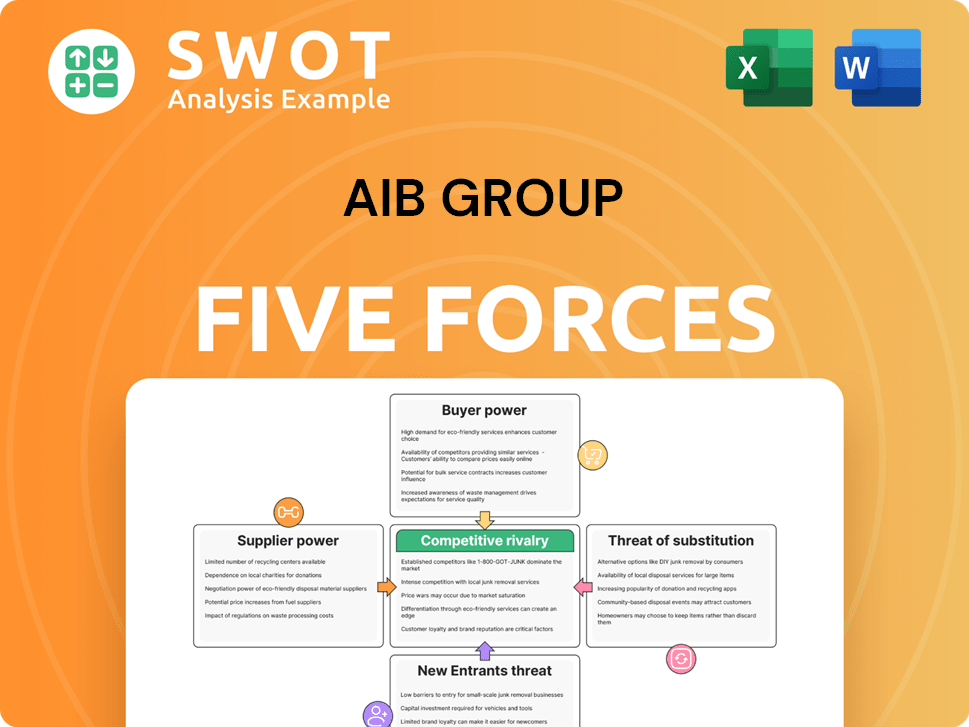
AIB Group Porter's Five Forces Analysis
- Covers All 5 Competitive Forces in Detail
- Structured for Consultants, Students, and Founders
- 100% Editable in Microsoft Word & Excel
- Instant Digital Download – Use Immediately
- Compatible with Mac & PC – Fully Unlocked
Related Blogs

- What is Competitive Landscape of AIB Group Company?
- What is Growth Strategy and Future Prospects of AIB Group Company?
- How Does AIB Group Company Work?
- What is Sales and Marketing Strategy of AIB Group Company?
- What is Brief History of AIB Group Company?
- Who Owns AIB Group Company?
- What is Customer Demographics and Target Market of AIB Group Company?
Disclaimer
All information, articles, and product details provided on this website are for general informational and educational purposes only. We do not claim any ownership over, nor do we intend to infringe upon, any trademarks, copyrights, logos, brand names, or other intellectual property mentioned or depicted on this site. Such intellectual property remains the property of its respective owners, and any references here are made solely for identification or informational purposes, without implying any affiliation, endorsement, or partnership.
We make no representations or warranties, express or implied, regarding the accuracy, completeness, or suitability of any content or products presented. Nothing on this website should be construed as legal, tax, investment, financial, medical, or other professional advice. In addition, no part of this site—including articles or product references—constitutes a solicitation, recommendation, endorsement, advertisement, or offer to buy or sell any securities, franchises, or other financial instruments, particularly in jurisdictions where such activity would be unlawful.
All content is of a general nature and may not address the specific circumstances of any individual or entity. It is not a substitute for professional advice or services. Any actions you take based on the information provided here are strictly at your own risk. You accept full responsibility for any decisions or outcomes arising from your use of this website and agree to release us from any liability in connection with your use of, or reliance upon, the content or products found herein.